Best Vitamin C Serum for Skin Over 40 Concerns
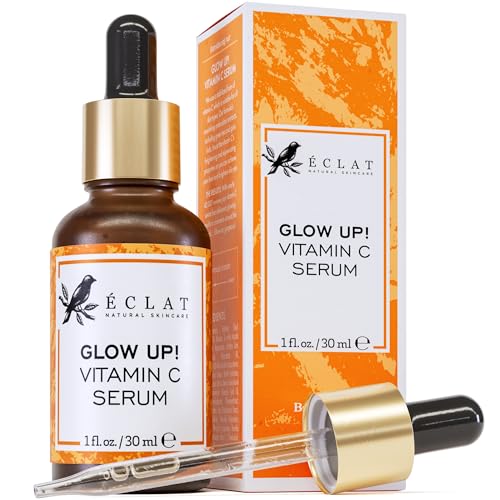
Seven vitamin C serums compared on the form of vitamin C used, bottle size, and what each listing actually publishes. Eclat leads, CeraVe wins on barrier support, and one pick gives you twice the volume.

By Frankie HopkinsUpdated 20 min read
On this page
- Best vitamin c serum for anti aging at a glance
- Who should skip vitamin C serums entirely?
- Why the percentage on the label misleads you
- How the seven picks were matched to buyers
- 1. Eclat Skincare Vitamin C Serum — Best overall
- 2. Naturium Vitamin C Complex Serum — Runner-up
- 3. CeraVe Skin Brightening Vitamin C Serum — Best premium
- 4. TruSkin Brightening Vitamin C Serum — Best minimal setup
- 5. SeoulCeuticals 20% Vitamin C Serum + CE Ferulic — Best for beginners
- 6. ELBBUB Premium 20% Vitamin C Serum — Best for pros
- 7. Ember Cloud Vitamin C Serum — Best budget pick
- What does anti aging actually mean on a serum label?
- What the listings do not tell you
- The verdict
- FAQ
The best vitamin C serum for anti aging in this set is the Eclat Skincare Vitamin C Serum, because it pairs a stable form of vitamin C with hyaluronic acid, ferulic acid and vitamin E in a 1 fl oz bottle at the second-cheapest position of the seven. If you'd rather have a published clinical study behind the claims, the Naturium Vitamin C Complex Serum is the better buy. This guide is not for anyone hoping a serum erases deep folds or replaces sunscreen. That reader should spend the money on a broad-spectrum SPF first and come back to vitamin C second, because a serum layered under no sun protection is working against a headwind it cannot beat.
Best vitamin c serum for anti aging at a glance
| Pick | Vitamin C form | Size | Price |
|---|---|---|---|
Best overall Eclat Skincare Vitamin C Serum |
Sodium ascorbyl phosphate 3-O ethyl ascorbic acid claim |
1 fl oz | Check Price |
Runner-up Naturium Vitamin C Complex Serum |
L-ascorbic acid plus Kakadu plum | 1 oz | Check Price |
Best premium CeraVe Skin Brightening Vitamin C Serum |
10% l-ascorbic acid claim | 1 fl oz | Check Price |
Best minimal setup TruSkin Brightening Vitamin C Serum |
Sodium ascorbyl phosphate | 1 fl oz | Check Price |
Best for beginners SeoulCeuticals 20% Vitamin C Serum |
20% claim plus CE ferulic | 1 fl oz | Check Price |
Best for pros ELBBUB Premium 20% Vitamin C Serum |
20% claim plus retinol | 2.02 fl oz | Check Price |
Best budget pick Ember Cloud Vitamin C Serum |
Vitamins C and E, stem cell claim | 1 fl oz | Check Price |


Who should skip vitamin C serums entirely?
Not everyone reading this needs one. Vitamin C is an antioxidant. It sits on top of your existing routine and does antioxidant work. It does not resurface, it does not fill, and it does not replace anything.
Three groups should walk away:
- Anyone without daily sun protection. Photodamage is the mechanism behind most of what people call aging skin. A serum fighting free radicals under an unprotected face is a fire extinguisher pointed at a burning building.
- Anyone actively using prescription tretinoin who has not asked their prescriber. Stacking acids on a retinoid-adjusting barrier is how people end up peeling.
- Anyone expecting structural change. No serum in this set claims to lift or fill, and the ones that come closest talk about the appearance of fine lines. That wording is deliberate.
If you're still here, you probably want brighter, more even-looking skin and a hedge against daily environmental load. That is a reasonable ask, and every pick below is aimed at it.
One more thing worth saying plainly. Amazon's search returns these seven for an anti aging query, but the anti aging part is a marketing frame, not a specification. None of the listings publish a measured wrinkle result you can compare across brands. You have to judge that claim yourself, and I'll show you what to judge it on.
Why the percentage on the label misleads you
Two of the seven put a percentage in the title. ELBBUB says 20%, SeoulCeuticals says 20%, and CeraVe's listing says 10% l-ascorbic acid. If you shop on that number alone, you'll reach for a 20% bottle and assume it works twice as hard as the 10%.
It doesn't work that way. Here's the trick with vitamin C: the form matters more than the concentration, because the form determines whether the molecule survives in the bottle long enough to reach your face.
L-ascorbic acid is the purest form. It is also the least stable. It oxidises on contact with air and light, which is why serums using it often turn amber and lose potency. Sodium ascorbyl phosphate is a derivative. It converts to ascorbic acid on the skin instead of in the bottle, so it holds up longer and tends to sting less.
That single fork splits this field cleanly:
- Derivative-based, gentler, longer shelf stability: Eclat and TruSkin, both using sodium ascorbyl phosphate.
- Pure l-ascorbic acid, higher potency ceiling, shorter usable life: Naturium and CeraVe.
- Percentage-forward with less published detail on form: SeoulCeuticals, ELBBUB and Ember Cloud.
Eclat's own listing makes the argument for group one. It states that most brands use ascorbic acid, which the brand calls unstable and irritating, and that its formula uses sodium ascorbyl phosphate instead. Treat that as the manufacturer's position, not a measured fact. But the underlying chemistry is real, and it is the reason I put a derivative at the top rather than the highest number on a label.
So the deciding criterion for the best vitamin C serum for anti aging is not percentage. It's whether the form suits your tolerance and whether you'll finish the bottle before it turns.
How the seven picks were matched to buyers
I worked backwards from profiles rather than forwards from features. Seven serums in the same category with the same 1 oz volume look interchangeable on a shelf, and a ranking that ignores who is buying is just a coin flip with paragraphs attached.
Four profiles came out of the data:
- The reactive-skin buyer. Has tried a strong vitamin C, got a flush or a sting, and wants a second chance at the category. Derivative forms only. Eclat and TruSkin serve this reader, CeraVe serves it from a barrier angle with its three-ceramide claim.
- The evidence-first buyer. Wants a number attached to a study, not a promise. Naturium's listing describes an 8-week clinical study on 32 subjects with improvement in the appearance of fine lines at 4 weeks. That is the only study detail published anywhere in this set, and it earns the runner-up spot on its own.
- The experienced layerer. Already runs actives, knows how to patch test, wants volume and strength. ELBBUB's 2.02 fl oz bottle is double the volume of every other pick here, and its listing adds retinol to the mix.
- The curious first-timer. Wants to know whether vitamin C does anything for their face before spending real money. Ember Cloud is the cheapest of the seven and asks the least of you.
What got picks pushed down rather than cut: thin published specifications. Ember Cloud lists a size and a count and nothing else. ELBBUB publishes no dimensions and no model. That doesn't make either serum bad, but when I can't compare a figure, I can't rank on it, and a listing that publishes less gets less benefit of the doubt.
1. Eclat Skincare Vitamin C Serum — Best overall
A stable derivative form, three supporting hydrators, and the second-cheapest position make this the most sensible default in the set.
Best for: anyone who has reacted badly to a strong ascorbic acid serum Skip it if: you specifically want l-ascorbic acid
Eclat is one of only two picks here built on sodium ascorbyl phosphate, and it's the cheaper of that pair by a wide margin. TruSkin sits at the most expensive end of this group. Eclat sits second-cheapest. Same headline form of vitamin C, very different price positions.
The bottle is 1 fl oz with a shipped weight of 3.17 oz and a footprint of 4.29 x 1.38 x 1.42 in, so it stands upright in a cabinet without tipping. The model code is EC-VITAMINC.
On the formula, the listing claims hyaluronic acid, aloe vera and vitamin E alongside the vitamin C, plus ferulic acid in the full product title. It also names 3-O ethyl ascorbic acid in the radiance claim, which is a second derivative form. Eclat says a blind study found 98% of participants rated it more nourishing than the leading brand. That's the brand's own figure with no comparison product named, so weigh it accordingly. The vegan and cruelty-free positioning is stated on the listing too.
The trade-off against Naturium is evidence. Naturium publishes a study size and a timeframe. Eclat publishes a percentage with no visible methodology, and it asks you to accept the derivative argument on chemistry alone.
Pros:
- Stable sodium ascorbyl phosphate rather than raw ascorbic acid
- Second-cheapest of the seven picks
- Hyaluronic acid, aloe vera and vitamin E all listed
- Ferulic acid included in the formula
- Compact 4.29 x 1.38 x 1.42 in bottle
Cons:
- Brand's 98% figure names no comparison product
- No published warranty or guarantee terms
- Derivative form means a lower potency ceiling than l-ascorbic acid
- No study size or duration disclosed
2. Naturium Vitamin C Complex Serum — Runner-up
The only pick in this set that publishes a study size and a timeframe for its fine-line claim.

Best for: buyers who want a published clinical study behind the claims Skip it if: your skin flushes with pure ascorbic acid
Naturium takes the opposite route to Eclat. It uses pure l-ascorbic acid, which the listing calls highly stable, combined with Kakadu plum as a second vitamin C source. Higher potency ceiling, higher irritation risk.
What sets it apart is specificity. The listing describes an 8-week clinical study on 32 subjects, with improvement in the appearance of fine lines and wrinkles visible at 4 weeks. Thirty-two subjects is a small study. It is still the only one in this group with a stated size and duration, and that counts for something when every other bottle just says "anti aging" and moves on.
The bottle is 1 oz at 28.3 g, measuring 5.4 x 1.4 x 1.4 in, model NATR-10001, released in 2019. Six years on the market with the same model code suggests a formula the brand hasn't needed to overhaul.
Naturium calls the serum appropriate for most skin types including sensitive, then advises a patch test first. Read that as a caution, not a reassurance. The listing also states pH-appropriate formulation, vegan, cruelty-free, paraben-free and gluten-free.
Against Eclat, the loss is tolerance. L-ascorbic acid at a concentration the listing doesn't disclose is a bigger ask of a reactive face than a derivative is, and Naturium sits a price tier higher.
Pros:
- Only pick publishing a study size and 4-week timeframe
- Pure l-ascorbic acid plus Kakadu plum
- pH-appropriate formulation stated on the listing
- Sold since 2019 under the same model code
Cons:
- Ascorbic acid concentration never disclosed
- Patch test advised even for the sensitive-skin claim
- Study covered only 32 subjects
- Mid-tier price for a 1 oz bottle
3. CeraVe Skin Brightening Vitamin C Serum — Best premium
The one pick that pairs vitamin C with a stated three-ceramide barrier formula, which matters more with age than the vitamin C does.

Best for: compromised or easily irritated barriers Skip it if: you want the most volume for your money
CeraVe's listing states 10% l-ascorbic acid, and it's the only pick here that names a specific ascorbic acid percentage. It's also the only one that publishes a ceramide count. Three essential ceramides, with the listing noting that ceramides make up 50% of the lipids in the skin barrier and that levels decrease with age.
That second point is the real argument for this bottle. A thinning lipid barrier is one of the more measurable things that happens to skin over time. A serum that delivers vitamin C while topping up ceramides is doing two jobs, and the second one is the harder job to do with any other product in your routine.
The bottle is 1 fl oz at 1.06 oz net weight, with the largest footprint of the group at 6.38 x 1.38 x 2.06 in. Released in 2019. The listing describes a gel texture with a non-greasy feel and advises a thin layer if you're stacking an eye cream or moisturiser on top.
It is fragrance-free, paraben-free, non-comedogenic and allergy tested according to the listing. Note that the listing also carries a dermatologist claim in its bullet text, which is marketing language rather than an independent verification.
The trade-off is straightforward. This is the most expensive pick here, at the same 1 fl oz volume as five of the others, and it uses l-ascorbic acid rather than a gentler derivative.
Pros:
- Specific 10% l-ascorbic acid figure published
- Three ceramides stated in the formula
- Fragrance-free, paraben-free and non-comedogenic
- Gel texture described as non-greasy
Cons:
- The most expensive pick in this set
- Bulkiest bottle at 6.38 in tall
- L-ascorbic acid carries more irritation risk than a derivative
- No warranty or satisfaction terms published
4. TruSkin Brightening Vitamin C Serum — Best minimal setup
A stable derivative plus five supporting ingredients, and the one buyers here choose most often.

Best for: a first vitamin C serum with no other actives in the routine Skip it if: you already own a stable vitamin C and want something stronger
TruSkin moves faster off the shelf than anything else in this group. Whatever else that tells you, it means the formula has been in wide circulation long enough to be a known quantity.
Like Eclat, it uses sodium ascorbyl phosphate. The listing says the form maintains potency over time while minimising irritation compared with harsher vitamin C serums. Around it: hyaluronic acid, vitamin E, aloe vera and jojoba oil, all named for moisture balance and barrier comfort.
That combination is why I call it the minimal setup pick. If your bathroom shelf currently holds a cleanser, a moisturiser and nothing else, this bottle adds the vitamin C and the hydration layer in one step. The listing states it's unscented and free from parabens, dyes and harsh additives, made in the USA and cruelty-free.
Specifications are modest but complete: 1 fl oz, 28.3 g, 4 x 1.5 x 1.5 in. That's the shortest bottle in the set, which is genuinely useful in a crowded cabinet.
Now the honest part. TruSkin sits at the top of the price range here, level with CeraVe, and it uses the same headline form of vitamin C as Eclat, which costs considerably less. You're paying for the wider distribution rather than a different molecule. And the model field on the listing reads "Best Vitamin C Serum", which is a keyword string rather than a product code, so there's no real model reference to check.
Pros:
- Stable sodium ascorbyl phosphate form
- Five named supporting ingredients including jojoba oil
- Shortest bottle here at 4 in tall
- Unscented, paraben-free and dye-free per the listing
Cons:
- Priced at the top of this set for the same form Eclat uses
- No usable model number published
- No concentration figure disclosed
- No published clinical detail behind the brightening claim
5. SeoulCeuticals 20% Vitamin C Serum + CE Ferulic — Best for beginners
Vitamin C, vitamin E and ferulic acid in one bottle, which is the classic antioxidant trio in a single purchase.

Best for: shoppers who want the CE ferulic combination in one bottle Skip it if: you are sensitive or new to acids
The CE ferulic combination is the reason to look here. Vitamin C, vitamin E and ferulic acid are frequently formulated together because the latter two are described as supporting the stability of the first. SeoulCeuticals puts all three in one 1 fl oz bottle and states its formula uses the same active ingredients as more expensive CE ferulic serums.
The colour is listed as amber, which is not a cosmetic choice. Amber packaging blocks light, and light is one of the things that degrades vitamin C. It's a small detail that suggests the packaging was chosen with the formula in mind.
Dimensions are 3 x 1.5 x 1.5 in with a shipped weight of 2.5 oz, making it the most compact bottle in the group by height. Good for a travel bag.
Then the claims get aggressive. The listing promises visible results within 3 weeks with daily use, says the serum is proven to help reduce the appearance of wrinkles, fine lines and crow's feet, and adds that it's guaranteed to give a brighter, more youthful complexion. It also claims pore shrinking, acne clearing and breakout prevention. Those are the brand's words, and no study, sample size or method appears anywhere on the listing to back any of them.
I've labelled this one for beginners in the sense that it's a single-bottle entry into the CE ferulic idea. Read the "skip it if" line carefully though. A 20% claim with no disclosed form is not what I'd hand a reactive face.
Pros:
- Vitamin C, E and ferulic acid together in one bottle
- Amber packaging shields the formula from light
- Smallest footprint at 3 x 1.5 x 1.5 in
- 20% concentration stated on the listing
Cons:
- No study or evidence behind the 3-week promise
- Form of vitamin C never specified
- Acne and pore claims stretch well past the category
- Priced at the premium end despite the entry-level positioning
6. ELBBUB Premium 20% Vitamin C Serum — Best for pros
Double the volume of every other pick here, with retinol and amino acids in the same bottle.

Best for: layering experience and a want for more product per bottle Skip it if: retinol in the same bottle worries you
ELBBUB is the volume outlier. At 2.02 fl oz it holds roughly twice what the other six do, and it sits third-cheapest overall. Per drop, that's the strongest value proposition in the set by a comfortable margin.
The formula is also the busiest. The listing names 20% vitamin C, hyaluronic acid, retinol and amino acids, with botanical aloe vera, witch hazel and vitamin E in support. It states the formula is plant-based and free of synthetic colour additives, fragrance and stabilizers.
That last point deserves a second read. Vitamin C is a molecule that benefits from stabilizers. A listing that advertises the absence of them alongside a 20% claim is making two statements that pull against each other, and there's no data published to resolve the tension.
Retinol in the same bottle is the other reason I've put this at the experienced end. Vitamin C and retinol are both potent, both used at different times of day by many people, and combining them in one application is a decision that suits someone who already knows how their skin handles each separately.
Published specifications are thin: a size, a count and a shipped weight of 0.55 lb. No dimensions, no model number, no release year. The volume advantage is real and it's the whole case for this bottle, but you're buying with less information than any other pick except Ember Cloud.
Pros:
- 2.02 fl oz, double the volume of the other picks
- Third-cheapest despite the largest bottle
- Retinol and amino acids alongside the vitamin C
- Free of synthetic colour and fragrance per the listing
Cons:
- No dimensions, model number or release year published
- Advertises no stabilizers alongside a 20% vitamin C claim
- Retinol in the same bottle complicates layering
- Form of vitamin C never named
7. Ember Cloud Vitamin C Serum — Best budget pick
The cheapest way into the category, with the least published information of anything here.

Best for: trying the category without committing much Skip it if: you compare specifications before buying
Ember Cloud is the cheapest of the seven and the slowest seller of the group. Both facts are worth knowing before you click.
The listing names vitamins C and E, hyaluronic acid, aloe vera and stem cells. It describes gentle revitalization, support for an even tone, and help defending against environmental stressors like sun exposure, pollution and makeup. The brand is family-owned and the serum is made in the USA according to the listing.
Stem cells is the ingredient that raises an eyebrow. It appears in the ingredient list with no source, no type and no concentration attached, and no study behind the collagen stimulation claim that follows it. Treat that bullet as marketing rather than a specification you can act on.
Published data amounts to three fields: 1 fl oz size, a count of 1, and a colour value of "Vitamin C Stem Cell". No weight, no dimensions, no model number, no release year, no form of vitamin C. That's the thinnest listing here by a distance, and it's the reason this sits last rather than higher despite the price.
Where it earns a place: if you have never used a vitamin C serum and you want to find out whether the category does anything for your face, this is the smallest bet available. Buy it, use it daily for a month under sunscreen, and you'll know whether to spend properly next time.
Pros:
- Cheapest pick in this set
- Vitamin C, E, hyaluronic acid and aloe vera named
- 1 fl oz matches the standard size here
- Low-commitment way to trial the category
Cons:
- Only three specification fields published
- Stem cell claim has no source, type or evidence
- No weight, dimensions or model number listed
- Form of vitamin C never disclosed
- Slowest-moving pick of the seven
What does anti aging actually mean on a serum label?
Read the seven listings closely and a pattern shows up. The phrasing is nearly always about appearance.
Naturium says improvement in the appearance of fine lines and wrinkles. Ember Cloud says supports minimizing the appearance of fine lines. SeoulCeuticals says helps reduce the appearance of wrinkles, fine lines and crow's feet. ELBBUB says it targets the common signs of aging. CeraVe talks about brightening and evening skin tone, and mentions declining ceramide levels with age without promising to reverse them.
That wording is the honest limit of the category. Here's what these serums plausibly do:
- Deliver an antioxidant that helps counter daily environmental load
- Improve how even and bright skin looks over weeks of use
- Add hydration, which makes fine lines less visible while skin is plump
Here's what none of them claim to do:
- Change skin structure
- Remove established creases
- Substitute for sun protection
So when you shop for the best vitamin C serum for anti aging, you're really shopping for tone, brightness and antioxidant coverage. That's a worthwhile purchase. It just isn't the purchase the phrase implies, and none of these listings publish a measured wrinkle outcome you could compare against another brand.
What the listings do not tell you
Three gaps run across all seven, and knowing them changes how you shop.
Concentration is often missing. Only CeraVe names an ascorbic acid figure at 10%. SeoulCeuticals and ELBBUB say 20% without naming the form, which means the number could refer to a derivative rather than pure ascorbic acid. Eclat, TruSkin, Naturium and Ember Cloud name a form or a source without a percentage. You cannot rank potency across this set, and any guide that tells you it has is guessing.
Packaging detail is thin. Vitamin C degrades with air and light exposure, so a pump or a sealed dropper protects a formula better than an open pipette. Only SeoulCeuticals gives you a clue, listing amber as the colour. CeraVe's dimensions suggest a taller bottle. Everything else is unstated.
Shelf life is unstated everywhere. No pick publishes a period-after-opening figure. This is why I keep returning to bottle volume. ELBBUB's 2.02 fl oz is excellent value on paper, but a 2 fl oz vitamin C serum used once daily takes months to finish, and every one of those months is an oxidation risk you can't quantify from the listing.
Only one of the seven publishes anything resembling a guarantee. Eclat's warranty field is used to explain its choice of sodium ascorbyl phosphate rather than to state warranty terms, so treat it as formula copy. The other six publish nothing in that field at all.
The verdict
Split this by budget tier, because the three tiers here buy genuinely different things.
At the entry end, Ember Cloud is the cheapest and the least documented, so it works only as a trial. Eclat sits just above it and is the one I'd actually buy: a stable derivative form, four named supporting ingredients, ferulic acid, and full published dimensions for close to the cheapest position in the set. ELBBUB is also entry-priced and delivers 2.02 fl oz, double every other bottle, but it adds retinol and publishes almost nothing you can verify.
The middle tier is Naturium alone, and it earns the runner-up spot on evidence. An 8-week clinical study on 32 subjects with results stated at 4 weeks is the only published methodology in this group. If you tolerate l-ascorbic acid and want a number attached to a study, that's your bottle.
At the premium end, CeraVe and TruSkin cost the most. CeraVe justifies it with a specific 10% l-ascorbic acid figure and three ceramides, which makes it the right pick for a fragile barrier. TruSkin uses the same form as Eclat for considerably more, so its case rests on familiarity rather than formula. SeoulCeuticals also lands premium and gives you the CE ferulic trio in amber packaging, with the loudest unsupported claims in the set.
The cutoff is tolerance. If strong vitamin C has stung you before, stay with Eclat. If it hasn't, Naturium.
FAQ
Is a vitamin C serum worth it for anti aging results?
A vitamin C serum is worth it for tone and brightness, and worth much less if you're expecting structural change. Every listing in this set phrases its wrinkle claim around appearance, which is the honest ceiling. Pair one with daily sun protection and you're addressing the antioxidant side of skin aging. Use one instead of sunscreen and you're working against yourself.
What decides value between a cheap and expensive vitamin C serum?
What decides value between these is form, volume and published detail, not the price gap. Eclat uses the same sodium ascorbyl phosphate as TruSkin at a much lower price position. ELBBUB gives you 2.02 fl oz where others give 1 fl oz. CeraVe charges the most and returns a specific 10% figure plus three ceramides. Cheap here does not mean weaker.
Which vitamin C form should I choose for sensitive skin?
For sensitive skin, choose sodium ascorbyl phosphate over pure l-ascorbic acid. It converts on the skin instead of oxidising in the bottle, and both Eclat and TruSkin state it minimises irritation compared with harsher formulas. Eclat is the cheaper route to that form. Naturium and CeraVe use l-ascorbic acid, and Naturium advises a patch test even while calling itself suitable for sensitive skin.
Eclat or Naturium: which vitamin C serum should I buy?
Between Eclat and Naturium, buy Eclat if your skin has reacted to a vitamin C serum before, and Naturium if it hasn't. Eclat uses a gentler derivative and costs less. Naturium uses l-ascorbic acid with Kakadu plum and publishes an 8-week study on 32 subjects showing improvement at 4 weeks, which is the only study detail in this group.
What is the biggest mistake buyers make with vitamin C serums?
The biggest mistake buyers make is chasing the highest percentage on the label. Two picks here claim 20% without naming the form of vitamin C, so the number tells you nothing comparable. Form determines stability, and stability determines whether the serum still works in month three. Bottle size matters too: a large bottle used daily takes months to finish.
Start with the form of vitamin C, then check the volume against how fast you'll realistically use it. Those two figures narrow seven bottles to two or three in about a minute, which is faster than reading any ingredient list. Eclat is the right default here because it gets the form right, keeps the price near the bottom of the set, and publishes enough about its own bottle that you can check the claims against the listing yourself. Add sunscreen every morning and give it four weeks before you judge anything, because that's the shortest window any listing in this group is willing to name.