Best Non Comedogenic Face Serum: CeraVe Retinol Leads

Pore-clogging isn't what separates these six serums. What actually separates them is the job each one does: retinol, hydration, sun defence or barrier repair. Here's which one belongs in your routine first.

By Frankie HopkinsUpdated 16 min read
On this page
- Best non comedogenic face serum at a glance
- How I screened the serums for this list
- What does non-comedogenic actually promise?
- 1. CeraVe Retinol Serum for Face with Niacinamide & — Best overall
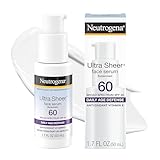
- 2. Neutrogena Ultra Sheer Sunscreen Serum SPF 60 — Runner-up
- 3. Neutrogena Hydro Boost Hydrating Serum with Hyaluronic — Best for beginners
- 4. The Ordinary UV Filters SPF 45 Serum Sunscreen for Face — Best for heavy use
- 5. CeraVe Skin Renewing Gel Oil — Best budget pick
- 6. Aveeno Calm + Restore Triple Oat Face Serum — Best for families
- Retinol, hydration or SPF: which serum first?
- How long does a 1 oz bottle last?
- What the listings do not tell you
- The verdict
- FAQ
The best non comedogenic face serum is the CeraVe Retinol Serum for Face with Niacinamide & Hyaluronic Acid, a 1 oz bottle that pairs encapsulated retinol with three ceramides for texture work on clog-prone skin. If your mornings are the problem rather than your nights, the Neutrogena Ultra Sheer Sunscreen Serum SPF 60 covers 1.7 fl oz of broad-spectrum protection in a serum texture instead. Most shoppers compare ingredient lists here. That's not the split that matters.
Best non comedogenic face serum at a glance
| Pick | Size | What it does | Price |
|---|---|---|---|
Best overall CeraVe Retinol Serum for Face with Niacinamide & |
1 fl oz | Encapsulated retinol + 3 ceramides |
Check Price |
| 1.7 fl oz | SPF 60 broad spectrum 80-min water resistance claim |
Check Price | |
Best for beginners Neutrogena Hydro Boost Hydrating Serum with Hyaluronic |
1 fl oz | Hyaluronic acid water gel oil-free claim |
Check Price |
Best for heavy use The Ordinary UV Filters SPF 45 Serum Sunscreen for Face |
2 fl oz | SPF 45 PA++++ claim no white cast |
Check Price |
Best budget pick CeraVe Skin Renewing Gel Oil |
1 oz | Gel-oil with 5 ceramides + sunflower oil |
Check Price |
Best for families Aveeno Calm + Restore Triple Oat Face Serum |
1 fl oz | Oat and feverfew fragrance-free |
Check Price |



How I screened the serums for this list
I worked from published listing data only: size, weight, dimensions, model, release year, and the manufacturer's own feature claims. Nothing here is a lab result and nothing here is a measured pore count.
The screen ran in three passes.
- The label has to be there. Every one of these six listings states non-comedogenic in the manufacturer's own copy. That was the entry requirement, and it cut everything that only implied it with words like "lightweight" or "oil-free."
- The bottle has to be a serum you'd actually reach for. Sizes here run from 1 fl oz to 2 fl oz, which is the range you can finish before a bottle of actives goes stale in a bathroom cabinet.
- The set has to cover different jobs. A shortlist of six hyaluronic acid serums would be useless. So this set spans retinol, hyaluronic acid, oat, a ceramide gel-oil and two SPF serums.
What got cut: products with no published dimensions, oversized pump bottles that aren't really a facial serum, and anything where the category path pointed at body care rather than face. Two of the six here still sit outside the serums subcategory. The Ordinary's pick is filed under sunscreens and the CeraVe gel-oil under face moisturizers. I kept both because the listings describe them as facial serums and the texture claims back that up.
Release years matter more than they look. The oldest picks here date to 2016, the newest to 2025.
What does non-comedogenic actually promise?
Non-comedogenic is a formulator's claim, not a regulated grade. There's no standardised test number attached to it the way SPF carries one, so two products both wearing the label can behave very differently on the same face.
That's the honest limit of the best non comedogenic face serum search. The phrase narrows the field, and it does not guarantee your skin agrees.
What you can check from a listing:
- Whether the brand states it at all. All six here do, in the manufacturer's copy.
- Whether fragrance is excluded. CeraVe's retinol serum, the CeraVe gel-oil, the Aveeno serum and the Neutrogena SPF 60 all carry fragrance-free claims.
- Whether oil is excluded. Neutrogena's Hydro Boost claims oil-free. The CeraVe Skin Renewing Gel Oil openly contains sunflower oil, so if oil in any form is your trigger, that pick is out on the label alone.
- What else is in the bottle. Retinol, SPF filters and oat extract each behave differently on reactive skin regardless of clogging.
So treat the label as a filter, not a promise. Patch test on a small area for several days before you commit a whole face to any new serum, especially one carrying an active like retinol. And judge by texture too: a water gel sits differently under makeup than a gel-oil does.
1. CeraVe Retinol Serum for Face with Niacinamide & — Best overall
The only pick here that pairs a texture-refining active with a barrier ingredient list, and the one buyers choose most often in this set.
Best for: someone with clog-prone skin who wants texture and fine-line work Skip it if: your skin reacts to retinol or you're pregnant
This is the pick that changes how skin looks rather than how it feels. The 1 oz bottle uses encapsulated retinol, and CeraVe says its MVE Technology releases it slowly over time rather than all at once. That matters on clog-prone skin, because the usual retinol problem isn't clogging, it's peeling.
The supporting cast is what earns it the top slot. CeraVe lists three essential ceramides plus hyaluronic acid, and the brand notes that ceramides make up 50% of the lipids in the skin barrier. Niacinamide sits in the name. The listing calls the formula fragrance-free and non-comedogenic, with evening use built up gradually.
It's compact too, at 5.2 x 1.5 x 2.25 in and 1.06 oz. Released in 2019, so it's had time on shelves.
The trade-off is price position: this is the most expensive pick here, and it's the only one asking you to tolerate an adjustment period. Everything else in this set is a comfort layer you can use twice daily from day one.
Pros:
- Encapsulated retinol with slow-release delivery claim
- Three ceramides plus hyaluronic acid and niacinamide
- Fragrance-free and non-comedogenic per the listing
- Sells faster than the rest of this set
- Compact 1 oz bottle at 1.06 oz
Cons:
- The most expensive pick in this group
- Retinol needs a gradual build-up, not immediate daily use
- Evening-only application per the brand's own guidance
- Only one bottle size published
2. Neutrogena Ultra Sheer Sunscreen Serum SPF 60 — Runner-up
The highest SPF number in this set, in a texture that behaves like a serum instead of a sunscreen.

Best for: daytime use when SPF keeps getting skipped Skip it if: you want an actives-based treatment serum
Sunscreen is the one skincare step people abandon because of how it feels, and this is the pick built around that problem. Neutrogena describes a weightless serum with a matte finish, broad spectrum SPF 60, and a claim that it primes skin for makeup in one step. The listing also states non-comedogenic and fragrance-free.
At 1.7 fl oz it's the second-largest bottle here, which matters because sunscreen only works when you use enough of it. Neutrogena claims water resistance for up to 80 minutes and calls the size TSA-compliant for carry-ons at 1.34 x 4.72 x 1.42 in.
Released in 2021, and roughly mid-range for this set on price.
Where it loses to the CeraVe retinol is scope. This protects and hydrates. It won't refine texture or address fine lines, so it's a companion to a treatment serum rather than a replacement for one. Reapplication is also part of the deal, which no other pick here demands.
Pros:
- Highest published SPF in this set at SPF 60
- 1.7 fl oz, the second-largest bottle here
- Fragrance-free and non-comedogenic per the listing
- 80-minute water resistance claim
- Matte finish claim suits oily skin
Cons:
- No treatment actives, so texture work needs a second product
- Requires reapplication through the day
- Filed outside the serums subcategory
- No published warranty or satisfaction terms
3. Neutrogena Hydro Boost Hydrating Serum with Hyaluronic — Best for beginners
The simplest formula in the group, and the only one claiming both oil-free and non-comedogenic.

Best for: a first serum on oily or combination skin Skip it if: you want visible change in texture or tone
If you've never used a serum, start with a single ingredient doing a single job. This one is hyaluronic acid in a water gel, and Neutrogena describes it as lightweight, oil-free and non-sticky under moisturizer or makeup.
It's the only pick in this set claiming oil-free alongside non-comedogenic, which is the combination oily skin usually hunts for. The brand states it's dermatologist tested and allergy tested, and names normal, oily and combination skin as suitable. Morning and night use, no adjustment period, nothing to build up to.
The bottle is 1 fl oz in a tall 6.18 x 1.5 x 1.5 in body, listed at 3.52 oz shipping weight. Released in 2016, making it the joint-oldest formula here.
The honest limit: hydration is a feel, not a result. Skin looks plumper while it's hydrated and returns to baseline when it isn't. Both CeraVe picks give you more ingredient work for a similar or lower price position, and the retinol pick actually changes texture.
Pros:
- Oil-free and non-comedogenic claims together
- Single-purpose hyaluronic acid, easy to layer
- Dermatologist tested and allergy tested per the listing
- Safe for twice-daily use from day one
Cons:
- No active that alters texture or tone
- Hydration effect is temporary by nature
- Oldest formula in this set alongside the CeraVe gel-oil
- Tall bottle takes more shelf height than the rest
4. The Ordinary UV Filters SPF 45 Serum Sunscreen for Face — Best for heavy use
The largest bottle here at 2 fl oz, which is exactly what generous sunscreen application needs.

Best for: generous daily application and reapplication Skip it if: you need the highest SPF number here
Underapplication is the quiet failure mode of every sunscreen, and volume solves it. At 2 fl oz this is the biggest bottle in the set, roughly 18% more product than the Neutrogena SPF 60 and double the 1 oz picks.
The Ordinary claims SPF 45 with PA++++ coverage against UVA and UVB, a serum-like texture that blends without greasiness, and no white cast on any skin tone. The listing also states non-comedogenic and names acne-prone, oily and sensitive skin. Application guidance is specific: shake well, apply 15 minutes before exposure, reapply every two hours.
Released in 2025, so it's the newest formula here by six years. It weighs 2.82 oz and sits in the premium price position.
Two catches. The SPF number is lower than the Neutrogena at SPF 45 against SPF 60, and this is the slowest seller of the six. No dimensions are published either, so you can't plan cabinet space in advance.
Pros:
- Largest bottle in this set at 2 fl oz
- PA++++ and broad-spectrum UVA/UVB claim
- No white cast claim across all skin tones
- Newest formula here, released 2025
- Non-comedogenic claim names acne-prone skin directly
Cons:
- Lower SPF than the Neutrogena pick
- The slowest seller of the six
- No published dimensions
- Premium price position without a higher SPF to show for it
5. CeraVe Skin Renewing Gel Oil — Best budget pick
The cheapest of the six, and the only one blending five ceramides with an oil for dry-but-clog-prone skin.

Best for: dry, tight skin that still breaks out Skip it if: you dislike any oil in a leave-on layer
Dry skin that still congests is a genuinely awkward brief, and this is the pick aimed at it. CeraVe describes CeraPlex, a blend of five ceramides with sunflower oil, in a gel-oil texture rather than a water gel. That's the highest ceramide count published in this set.
It's the cheapest of the six, which is unusual for a formula carrying that much barrier work. The brand calls it fragrance-free and non-irritating, developed with dermatologists, and says it can be used alone or under moisturizer for all-day hydration. The listing also states non-comedogenic.
The 1 oz bottle measures 5.5 x 2.25 x 2.25 in and 28.3 g. Released in 2016.
The name is the warning label: this contains oil, and some people with congested skin simply won't tolerate that regardless of what the non-comedogenic claim says. It's also filed under face moisturizers rather than serums, which tells you something about how it wears. Treat it as the richest layer in this group, not the lightest.
Pros:
- The cheapest pick in this set
- Five ceramides, the highest count published here
- Fragrance-free and non-irritating claims
- Works alone or layered under moisturizer
Cons:
- Contains sunflower oil, a common personal trigger
- Listed as a moisturizer rather than a serum
- Oldest formula here alongside the Hydro Boost
- No treatment active for texture or tone
6. Aveeno Calm + Restore Triple Oat Face Serum — Best for families
The longest exclusion list in this set: no fragrance, parabens, alcohol, phthalates or dyes.

Best for: reactive skin shared across a household Skip it if: you want an anti-aging active
One bottle on a shared shelf has to suit the most reactive face in the house. That's this one. Aveeno lists it free of fragrance, parabens, alcohol, phthalates and dyes, plus allergy-tested, hypoallergenic and non-comedogenic. No other pick here publishes that many exclusions together.
The formula is prebiotic oat with feverfew, and Aveeno claims it soothes and restores the skin barrier in two hours with 24-hour moisture. Texture is described as fast-absorbing with a non-greasy feel.
It's the second-cheapest pick here, in a 1 fl oz bottle measuring 3.88 x 1.63 x 3 in. Released in 2020. That squat shape is the most cabinet-friendly footprint in the set.
Where it gives ground: this is a calming serum, not a corrective one. There's no retinol, no SPF, no stated hyaluronic acid. If nobody in your household has reactive skin, the CeraVe retinol serum does more with your money and the CeraVe gel-oil does more for less.
Pros:
- Longest published exclusion list in this set
- Allergy-tested, hypoallergenic and non-comedogenic claims
- Second-cheapest pick here
- Compact 3.88 x 1.63 x 3 in footprint
- Two-hour barrier claim and 24-hour moisture claim
Cons:
- No corrective active of any kind
- No SPF, so it needs a daytime partner
- Hydration ingredients less specific than the hyaluronic acid picks
- Sells slower than four of the six
Retinol, hydration or SPF: which serum first?
Buyers looking for the best non comedogenic face serum usually own zero serums or four. Here's the order that works.
- If you own no serum at all, start with SPF. The Neutrogena Ultra Sheer at SPF 60 prevents the damage the other picks try to address later. That's not a fashionable answer, but it's the right one.
- If you already wear sunscreen daily, add the CeraVe retinol serum at night. It's the only pick in this group with an active that refines texture.
- If retinol has burned you before, the Aveeno oat serum or the CeraVe gel-oil buys your barrier a recovery window first.
- If your skin feels tight by mid-afternoon, hyaluronic acid is the fix. Neutrogena's Hydro Boost is the pure version here.
- If you're outdoors for hours, volume wins. The Ordinary's 2 fl oz bottle survives reapplication every two hours where a 1 oz bottle won't.
One rule holds across all five paths. Introduce one serum at a time and give it two weeks before adding another, because layering three new formulas at once makes any reaction impossible to trace. Retinol and SPF go in opposite halves of the day: retinol at night, sunscreen every morning.
How long does a 1 oz bottle last?
Four of these six bottles hold 1 oz. That's the standard serum size, and it's genuinely enough for a treatment serum used once nightly on the face alone.
Sunscreen is a completely different equation. A face-and-neck application uses far more product than a few drops of retinol, and reapplication every two hours multiplies it again. That's why the two SPF picks come in larger bottles: 1.7 fl oz for the Neutrogena and 2 fl oz for The Ordinary.
Rough guide by pick:
- CeraVe Retinol Serum, 1 fl oz — evening use only, building up gradually, so it stretches furthest
- CeraVe Skin Renewing Gel Oil, 1 oz — daily use, alone or under moisturizer
- Neutrogena Hydro Boost, 1 fl oz — twice daily, so it empties roughly twice as fast as an evening-only serum
- Aveeno Calm + Restore, 1 fl oz — daily, and faster still if two people share it
- Neutrogena SPF 60, 1.7 fl oz — every morning plus reapplication
- The Ordinary SPF 45, 2 fl oz — the only bottle sized for genuinely liberal application
Actives don't improve with age either. A retinol serum you take a year to finish spends most of that year past its best, so a 1 oz bottle is a feature rather than a limitation.
What the listings do not tell you
Plenty is missing from every one of these six listings, and it's worth knowing what you're accepting.
No ingredient concentrations. CeraVe names encapsulated retinol and niacinamide but publishes no percentage. Same for hyaluronic acid across the Neutrogena and CeraVe picks. Two serums naming the same ingredient can differ tenfold.
No warranty terms. Not one of the six publishes one. That's normal in skincare, but it means returns depend entirely on the seller.
No pH. Which matters if you're layering, since some actives need a specific range to work.
Weights that don't match volumes. The Aveeno serum and the Neutrogena Hydro Boost both list 3.52 oz against a 1 fl oz volume, because those figures include packaging. Don't read a shipping weight as bottle contents.
Only two sellers list each pick. That's a narrow supply picture across the whole set, which shows up as fewer alternatives if one seller runs out.
No dimensions at all for The Ordinary. So if shelf space is genuinely tight, that's the one you can't plan around.
The verdict
Three tiers, three clear answers.
At the entry level, the CeraVe Skin Renewing Gel Oil is the pick. It's the cheapest of the six and it publishes five ceramides plus sunflower oil, which is more barrier work than anything else at that position. The Aveeno Calm + Restore sits just above it and takes the win instead if fragrance, dyes or parabens are the specific problem, thanks to the longest exclusion list in the set.
In the middle, the Neutrogena Ultra Sheer SPF 60 is the more useful buy than the Hydro Boost. Both are roughly mid-range here, but SPF 60 in a 1.7 fl oz serum texture prevents damage while hyaluronic acid only masks dryness for a few hours. Choose the Hydro Boost only if it's your first serum ever and you want a single ingredient to judge.
At the premium end, the CeraVe Retinol Serum for Face with Niacinamide & Hyaluronic Acid is the best non comedogenic face serum in this group and the winner overall. Encapsulated retinol, three ceramides and niacinamide in a 1 oz bottle is the only combination here that changes how skin looks rather than how it feels. The Ordinary's SPF 45 sits at the same price level with double the volume at 2 fl oz, which is its exact advantage: it's the one bottle sized for liberal reapplication.
FAQ
Is a non comedogenic face serum worth the money?
A non comedogenic face serum is worth it when the formula does a job your moisturizer can't. The CeraVe retinol pick brings encapsulated retinol, niacinamide and three ceramides in one 1 oz bottle, which is genuine ingredient work. A pure hydration serum is more of a comfort layer, so judge each bottle by what it adds rather than by the label.
Which is better, the CeraVe retinol serum or the Aveeno oat serum?
Better between the CeraVe retinol serum and the Aveeno oat serum depends entirely on whether your skin is currently calm. CeraVe's 1 oz bottle carries an active that refines texture over weeks, with a build-up period. Aveeno's 1 fl oz serum excludes fragrance, parabens, alcohol, phthalates and dyes, and claims barrier restoration in two hours. Reactive skin should start with Aveeno.
Can I use an SPF serum and a treatment serum together?
Using an SPF serum and a treatment serum together works well, provided you split them across the day. Apply the CeraVe retinol serum in the evening, per the brand's own guidance, then the Neutrogena SPF 60 or The Ordinary SPF 45 every morning as the final step. Sunscreen goes last, over everything else, never underneath a hydrating layer.
Does non-comedogenic mean it will not cause breakouts?
Non-comedogenic does not mean guaranteed breakout-free. It's a formulator's claim with no standardised test number behind it, unlike SPF. All six picks here state it, but individual reactions vary. The CeraVe gel-oil contains sunflower oil, for example, which some congested skin won't tolerate. Patch test a small area for several days before committing to full-face use.
What size non comedogenic face serum should I buy?
The size of a non comedogenic face serum should match how much you apply. Treatment serums used at night are fine at 1 oz, which four of these six picks offer. Sunscreen needs far more, which is why the Neutrogena runs 1.7 fl oz and The Ordinary 2 fl oz. Smaller bottles also mean actives get used before they degrade.
Start with the CeraVe Retinol Serum for Face with Niacinamide & Hyaluronic Acid at night, three evenings a week, and add nothing else for two weeks. That single change tells you more about your skin than any ingredient list will, because encapsulated retinol with a slow-release claim is the only formula in this set designed to alter texture rather than temporarily improve how skin feels. Then layer a morning SPF over the top, and you've built the whole routine from two bottles. Everything else in this group is a refinement on that foundation, not a substitute for it.