Best Natural Vitamin C Serums by Form and Actives

Seven vitamin C serums ranked by the form of vitamin C, the supporting actives and bottle size, with the pick that suits congested skin and the ones that don't.

By Frankie HopkinsUpdated 18 min read
On this page
- Best natural vitamin C serum for acne prone skin at a glance
- How I ranked these seven serums
- Which form of vitamin C is in the bottle?
- 1. Eva Naturals Vitamin C Serum for Face with Retinol & — Best overall
- 2. TruSkin Brightening Vitamin C Serum for Face — Runner-up
- 3. TruSkin Tea Tree Acne Serum with Salicylic Acid & Retinol — Best premium
- 4. Florence Vitamin C Serum For Face — Best for families
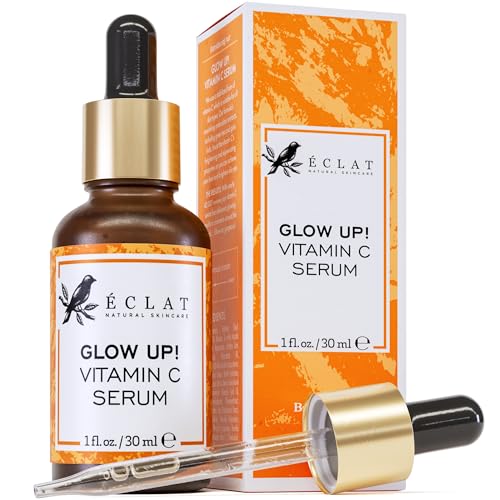
- 5. Eclat Skincare Vitamin C Serum — Best budget pick
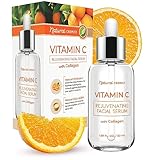
- 6. Natural Chemist Vitamin C Serum With Collagen — Best for beginners
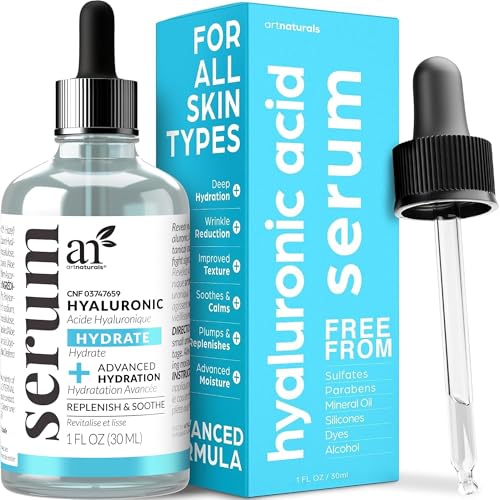
- 7. ArtNaturals Hyaluronic Acid Serum — Best for heavy use
- Does vitamin C actually help with breakouts?
- How long does a 1 oz bottle last?
- What the listings leave out
- When a different serum wins
- The verdict
- FAQ
The best natural vitamin C serum for acne prone skin is the Eva Naturals Vitamin C Serum, because its 1 oz formula is the only one here that pairs stabilized sodium ascorbyl phosphate with salicylic acid and niacinamide in the same dropper. If dryness rather than shine is your problem, TruSkin's Brightening Vitamin C Serum trades the exfoliating acid for hyaluronic acid, vitamin E and jojoba oil.
This roundup is not for everyone. If your skin is actively inflamed with cystic nodules, no serum in this set is the answer, and a prescription from a clinician will do more in six weeks than any of these will in six months. These are tone-and-texture products with supporting actives. Read on if your concern is post-blemish marks, congestion and shine.
Best natural vitamin C serum for acne prone skin at a glance
| Pick | Vitamin C form | Blemish actives | Price |
|---|---|---|---|
Best overall Eva Naturals Vitamin C Serum |
Sodium ascorbyl phosphate | Salicylic acid Niacinamide Retinol |
Check Price |
Runner-up TruSkin Brightening Vitamin C Serum |
Sodium ascorbyl phosphate | None listed (hyaluronic acid focus) |
Check Price |
Best premium TruSkin Tea Tree Acne Serum |
Listed, form unstated | Salicylic acid Tea tree oil Retinol |
Check Price |
Best for families Florence Vitamin C Serum |
Stable form, unnamed | Niacinamide | Check Price |
Best budget pick Eclat Skincare Vitamin C Serum |
3-O ethyl ascorbic acid | None listed | Check Price |
Best for beginners Natural Chemist Vitamin C Serum |
Listed, form unstated | None listed (collagen focus) |
Check Price |
Best for heavy use ArtNaturals Hyaluronic Acid Serum |
None | None listed | Check Price |



How I ranked these seven serums
I used three criteria, weighted in this order.
- The form of vitamin C, weighted heaviest. It is the single fact that separates a serum still working in month three from one that has gone brown. Four of these seven name a specific form. Three do not.
- Supporting actives relevant to congested skin, weighted second. Salicylic acid, niacinamide, tea tree oil and retinol all appear across the set. Only two picks list an exfoliating acid.
- Published specifications, weighted third. Bottle size, weight, dimensions and model number. A listing that publishes all four gives you something to check. One pick here publishes no weight at all.
Why that order? Because the qualifier in the search is the weakest part of it. Amazon returned a hyaluronic acid serum with no vitamin C in this set, which tells you the search engine treated the phrase loosely. So I ranked on what the listings actually document rather than on which brand shouts loudest about blemishes.
- Cut for lacking a named vitamin C form and a blemish active: the Natural Chemist and Eclat entries dropped below mid-table.
- Cut from contention entirely for the top spot: ArtNaturals, which lists hyaluronic acid as its hero and no vitamin C.
- Kept despite thin specifications: Natural Chemist, because its 1.69 fl oz bottle is the second-largest here.
Which form of vitamin C is in the bottle?
This is the deciding question, and most guides skip it. Vitamin C is not one ingredient. It is a family, and the members behave very differently in a bottle sitting on a bathroom shelf at 22 degrees.
Sodium ascorbyl phosphate is a stabilized derivative. Eva Naturals and TruSkin both name it, and both say the same thing about it: it resists oxidation longer than raw ascorbic acid. Eclat's listing goes further and puts a figure to the comparison, claiming 98% of a blind study group found its serum more nourishing than a leading brand. That is the brand's claim, not a measured result I can verify, and note that Eclat's own feature copy names a different active, 3-O ethyl ascorbic acid, so the two parts of that listing do not quite agree.
Here is what that means in practice for the best natural vitamin C serum for acne prone skin:
- Named derivative, stated on the listing. Eva Naturals, TruSkin Brightening and Eclat. You know what you are buying.
- Vitamin C listed but the form unstated. TruSkin Tea Tree, Florence and Natural Chemist. Florence at least says "a stable form", which narrows it.
- No vitamin C at all. ArtNaturals, which is a hyaluronic acid serum the search dragged in.
If a listing will not name the form, treat the vitamin C as a supporting ingredient rather than the reason to buy.
1. Eva Naturals Vitamin C Serum for Face with Retinol & — Best overall
The only serum in this set that pairs a named stable vitamin C with salicylic acid and niacinamide in one 1 oz bottle.
Best for: congested skin that also wants tone work Skip it if: you react badly to retinol
Eva Naturals stacks more relevant actives than anything else here. The listing names sodium ascorbyl phosphate, retinol, niacinamide, salicylic acid, botanical hyaluronic acid, MSM and squalane, plus tea tree and rosehip seed oils. That combination is the reason it takes the top spot: salicylic acid works inside the pore, niacinamide addresses oil and redness, and the stabilized vitamin C handles the marks left behind.
The bottle is compact at 3.07 x 1.37 x 0.9 in and 22.7 g, which makes it the smallest package of the seven by volume of box. Eva Naturals suggests 2 to 3 drops daily and asks for at least four weeks before you judge it, which is a more honest timeline than most listings offer. The brand calls the formula vegan, cruelty-free and free from parabens and sulfates.
The trade-off is real. This is the second-most expensive pick here, and stacking retinol with salicylic acid in a single daily serum is a lot for skin that flushes easily. Nothing on the listing tells you the percentage of either. Compared with the TruSkin Brightening serum, you get more actives and less cushioning.
Pros:
- Names sodium ascorbyl phosphate, a stabilized form
- Only pick listing salicylic acid plus niacinamide plus retinol
- Compact 3.07 x 1.37 x 0.9 in bottle
- Squalane and rosehip oil listed for barrier support
- Brand states a realistic four-week timeline
Cons:
- No active percentages published anywhere
- Retinol plus salicylic acid is aggressive for reactive skin
- Second-highest price position in this set
- Smallest bottle weight at 22.7 g
2. TruSkin Brightening Vitamin C Serum for Face — Runner-up
Same stabilized vitamin C as the winner, with hydration in place of exfoliating acid.

Best for: dry, tight skin that flakes on actives Skip it if: shine and clogged pores are the main issue
TruSkin is the one buyers choose most often in this group by a wide margin, and the formula explains why. It names the same sodium ascorbyl phosphate as Eva Naturals, and TruSkin adds that the derivative helps minimise irritation compared with harsher vitamin C serums. Around it sit hyaluronic acid, vitamin E, aloe vera and jojoba oil.
Read that ingredient list carefully and you'll notice what is missing. There is no salicylic acid, no tea tree, no retinol. This is a brightening and hydrating serum, and the brand describes it exactly that way: uneven tone, dark spots, dullness, texture. For post-blemish marks on skin that already feels dry, that focus is an advantage, not a gap.
The bottle is 1 fl oz, 28.3 g, and 4 x 1.5 x 1.5 in. It's unscented and free from parabens and dyes. This is the most expensive pick here, which is the honest cost of a stable derivative in a well-cushioned base. Against Eva Naturals you lose the pore-clearing acid entirely, so oily skin will need a separate exfoliant.
Pros:
- Names the same stabilized derivative as the winner
- Hyaluronic acid, vitamin E, aloe and jojoba listed
- Unscented, no parabens or dyes
- Sells faster than anything else in this set
Cons:
- No exfoliating acid for congestion
- Highest price position of the seven
- Jojoba oil may not suit very oily skin
- No published percentage of vitamin C
3. TruSkin Tea Tree Acne Serum with Salicylic Acid & Retinol — Best premium
The most blemish-focused formula here, with vitamin C in a supporting role rather than the lead.

Best for: oily skin where blemishes come first Skip it if: tea tree oil stings your face
Flip the priorities and this is the pick. TruSkin builds this one around tea tree oil, salicylic acid and niacinamide, with vitamin C and retinol listed as support for clarity and tone. The brand's framing is telling: it says the vitamin C and retinol work to maintain a healthy-looking complexion "without over-drying", which positions them as balance rather than as the headline.
It is the heaviest bottle in the set at 3.04 oz, in a 4 x 1.25 x 1.25 in package, unscented and free from parabens and dyes. If your main complaint is congestion and excess oil, and marks are secondary, the active priority here matches your problem better than the winner's does.
Two honest weaknesses. First, the listing never names the form of vitamin C, so you cannot judge how stable it is. Second, this is the highest price position in the set and the slowest seller of the seven, which is a strange combination for a formula this specific. Tea tree oil also divides people sharply, and a patch test on your jaw is worth the two days it costs.
Pros:
- Salicylic acid and niacinamide named together
- Tea tree oil for congested, blemish-prone skin
- Heaviest bottle here at 3.04 oz
- Unscented, cruelty-free, no dyes
Cons:
- Form of vitamin C never stated
- Highest price position for the least vitamin C detail
- Tea tree oil irritates some skin
- The slowest seller of the seven
4. Florence Vitamin C Serum For Face — Best for families
Twice the volume of every other pick, at a middling price position.

Best for: two people sharing one bottle Skip it if: you want a small bottle you finish fast
Florence is the only 2 fl oz bottle here. Everything else is 1 fl oz or 1.69 fl oz, so this is double the volume of five of the seven picks, sitting mid-range on price. If two people in a household are both using vitamin C, or you apply to face, neck and eye area as the brand suggests, that arithmetic matters more than any single ingredient.
The formula is described as a stable form of vitamin C with low and medium molecular weight hyaluronic acid, niacinamide, vitamin E, jojoba oil and aloe vera. Niacinamide is the ingredient that earns it a place in a guide about congested skin. Florence calls it dermatologist tested on all skin types and tones, and recommends morning and night use.
The catch with volume is oxidation. A 2 fl oz bottle used twice a day still takes months to finish, and every one of those days the formula sits exposed to air. Florence says the form is stable but never names it, which is exactly the detail you'd want before committing to a big bottle. The 5.12 x 3.15 x 1.57 in box also does not travel well.
Pros:
- 2 fl oz, double the volume of most picks here
- Niacinamide plus two molecular weights of hyaluronic acid
- Mid-range price position for the largest bottle
- Suggested for face, neck and eye area
Cons:
- Vitamin C form described only as "stable", never named
- Large bottle means longer air exposure before you finish it
- No exfoliating acid listed
- Bulkiest package at 5.12 x 3.15 x 1.57 in
5. Eclat Skincare Vitamin C Serum — Best budget pick
The cheapest of the seven, and the only one to name 3-O ethyl ascorbic acid.
Best for: first-time vitamin C buyers spending little Skip it if: you need a blemish-specific active
Eclat is the cheapest pick here and it still names its vitamin C, which is more than three pricier serums in this set manage. The feature copy specifies 3-O ethyl ascorbic acid, a derivative chosen for stability. Around it: hyaluronic acid, aloe vera, ferulic acid and vitamin E. The brand describes it as vegan, cruelty-free and made with natural ingredients, in a 1 fl oz bottle weighing 3.17 oz.
One thing to know before you buy. The listing text is internally inconsistent, naming sodium ascorbyl phosphate in one place and 3-O ethyl ascorbic acid in another, along with a claim that 98% of a blind study group found it more nourishing than a leading brand. Both are derivatives, both are more stable than raw ascorbic acid, so the practical difference to you is small. But it's sloppy copy on a product whose whole pitch is ingredient precision.
For congested skin specifically, this is a brightening serum and nothing more. No salicylic acid, no niacinamide, no tea tree. That's the honest gap against Eva Naturals, and it's why price alone doesn't win here.
Pros:
- Cheapest of the seven picks
- Names a specific vitamin C derivative
- Ferulic acid and vitamin E listed alongside
- 3.17 oz bottle, second-heaviest here
Cons:
- Listing names two different vitamin C forms
- No blemish-targeting active at all
- The 98% figure is the brand's own claim
- Vegan and cruelty-free claims are unverified by the listing
6. Natural Chemist Vitamin C Serum With Collagen — Best for beginners
A 1.69 fl oz bottle with the gentlest stated active load in this set.

Best for: someone easing into actives slowly Skip it if: you want published bottle weight and full specs
If actives frighten you, start here. Natural Chemist lists vitamin C and collagen with a hydration focus and no acids, no retinol and no essential oils. That's the mildest profile of the seven, which makes it a reasonable first step if you've reacted to strong serums before. The brand does claim it targets blemishes, so treat that as marketing rather than mechanism, since no blemish-specific ingredient appears in the listing.
The bottle is 1.69 fl oz, the second-largest volume here, at 2.04 x 4.7 x 2.04 in. Natural Chemist describes it as formulated by Korean skin care specialists, dermatologist tested and cruelty-free. Price position is second-cheapest, so the volume-to-cost ratio is good.
The specifications are the thinnest of any pick. No published weight, and the model number reads as a mangled barcode, which suggests the listing was built quickly. The form of vitamin C is never named either. It's also the second-slowest seller here. If you want documentation you can check, four other picks give you more.
Pros:
- Mildest listed active load of the seven
- 1.69 fl oz, second-largest volume here
- Second-cheapest price position
- No acids or essential oils to trigger reactions
Cons:
- No published bottle weight
- Vitamin C form never named
- Blemish claim has no matching ingredient
- Second-slowest seller in this set
7. ArtNaturals Hyaluronic Acid Serum — Best for heavy use
A hydration layer, not a vitamin C serum, and the listing is upfront about that.
Best for: layering hydration under a separate vitamin C Skip it if: you want vitamin C in this bottle
Be clear about what this is. ArtNaturals lists hyaluronic acid as the hero and no vitamin C anywhere in its features. The brand even says the serum is "the perfect complement to our retinol and vitamin C serums", which is a straightforward admission that it's a supporting product. It appears in this comparison because the search returned it, and the honest thing is to tell you why it doesn't belong.
On its own terms it has a use. ArtNaturals says hyaluronic acid hydrates deeply without clogging pores, which is why a light humectant layer often sits well under a vitamin C serum on skin that's dry from acne treatment. At 1 fl oz and 22.7 g, in a 5 x 2 x 2 in box, it's the third-cheapest pick, so using it generously costs less than using the winner generously.
The gaps: no antioxidant vitamin C, no exfoliating acid, no niacinamide. The feature copy is also poorly edited, with one bullet reading simply "Anti" before the sentence continues. Against every other pick here, it does one job while they do two or three.
Pros:
- Third-cheapest position in this set
- Brand states it won't clog pores
- Lightweight 22.7 g, 1 fl oz bottle
- Layers cleanly under a separate vitamin C serum
Cons:
- Contains no vitamin C at all
- No blemish or brightening active listed
- Truncated, poorly edited feature copy
- Needs a second product to do the job you came for
Does vitamin C actually help with breakouts?
Here's where I have to be careful, because the search phrase promises more than these listings deliver. Amazon returned a hyaluronic acid serum with no vitamin C in it, which means the "acne prone" part of the query was treated loosely. So no product here can be said to clear blemishes, and I'm not going to pretend otherwise.
What the listings do support:
- Post-blemish marks. Every vitamin C pick here describes work on dark spots and uneven tone. That's the mark left after a blemish heals, and it's the strongest documented use case in this set.
- Oil and congestion, but only in two picks. Eva Naturals and TruSkin Tea Tree both list salicylic acid, which works inside the pore. Those are the two that make a mechanical case.
- Redness and barrier support. Niacinamide appears in Eva Naturals, TruSkin Tea Tree and Florence.
What no listing here supports is a claim to treat acne as a condition. Natural Chemist's copy says it "fixes blemishes & acne", and there's no ingredient in its stated formula that explains how. If breakouts are your primary concern rather than the marks they leave, the right move is a clinician, and the best natural vitamin C serum for acne prone skin becomes the thing you use alongside that, not instead of it.
How long does a 1 oz bottle last?
Eva Naturals gives the only usage figure in the set: 2 to 3 drops daily. Work from that and the volume differences here stop being trivia.
Five of these seven are 1 fl oz. Natural Chemist is 1.69 fl oz. Florence is 2 fl oz, so it holds twice what the 1 oz bottles do. At the same drop count, Florence lasts twice as long as Eva Naturals, TruSkin Brightening, TruSkin Tea Tree, Eclat or ArtNaturals.
That cuts both ways. A bigger bottle means more days of air exposure through the dropper, and oxidation is the reason vitamin C serums go brown and stop working. It's also why the form matters more the bigger the bottle gets. Florence's listing says "a stable form" without naming it, which is the wrong pairing with the largest volume in the set.
My rule of thumb: if the listing names a stabilized derivative, a larger bottle is fine. If it doesn't, buy 1 fl oz and finish it. On that basis Florence's size is a slight gamble and Natural Chemist's 1.69 fl oz is a bigger one, while TruSkin Brightening's 1 fl oz of named sodium ascorbyl phosphate is the safest volume-to-stability match of the seven.
What the listings leave out
Four things are missing from every single listing in this set, and knowing that stops you overpaying for vagueness.
- Active percentages. Not one product states how much vitamin C, salicylic acid, niacinamide or retinol it contains. A serum with 0.5% vitamin C and one with 15% can carry identical marketing copy.
- pH. Vitamin C derivatives work in a specific pH range, and none of these seven publish theirs.
- Packaging opacity. Eva Naturals lists its bottle colour as white and TruSkin Brightening lists clear. Clear glass exposes the formula to light. That's a difference worth knowing, and neither brand comments on it.
- A published warranty. Eclat's warranty field contains a marketing paragraph about ingredient stability, not a warranty. No pick here offers a stated guarantee.
Three listings also carry "dermatologist tested" language. That phrase means a dermatologist was involved in some testing, not that dermatologists recommend the product, and no listing here says what the testing measured. Treat it as a signal that the brand spent money on a study, and nothing more specific than that.
When a different serum wins
The winner isn't the answer for everyone. Three conditions flip it, each one checkable in about ten seconds.
- If retinol has ever made you peel, skip Eva Naturals and buy TruSkin Brightening. Same stabilized sodium ascorbyl phosphate, no retinol, no salicylic acid, and hyaluronic acid plus jojoba oil doing the cushioning instead.
- If your forehead is shiny by noon and blemishes outrank marks, buy the TruSkin Tea Tree serum. Its active priority is inverted: tea tree and salicylic acid lead, vitamin C supports. That's the right order for oil-driven congestion.
- If two of you share one bottle, buy Florence at 2 fl oz. It's the only pick that holds double, and it still carries niacinamide.
Two more flips worth naming. If you have never used vitamin C and want to spend as little as possible finding out whether your skin tolerates it, Eclat is the cheapest entry point and it names its derivative. And if you already own a vitamin C serum you like, ArtNaturals is a hydration layer to go under it, not a replacement for it.
The verdict
The best natural vitamin C serum for acne prone skin is the Eva Naturals Vitamin C Serum. It's the only pick in this set that names a stabilized form of vitamin C, sodium ascorbyl phosphate, and pairs it with salicylic acid and niacinamide in the same 1 oz bottle. That combination covers both halves of the problem: the pore and the mark it leaves. No other serum here does both with named ingredients.
Two conditions flip that recommendation. First, retinol. Eva Naturals stacks it with salicylic acid and publishes no percentage for either, so if your skin has peeled on retinol before, buy the TruSkin Brightening serum instead. Its exact advantage is the same stabilized derivative in a gentler base of hyaluronic acid, vitamin E, aloe and jojoba, which is why it's the fastest-selling pick in this group.
Second, volume. If two people are using one bottle, Florence's 2 fl oz is double what five of these picks hold, and it still lists niacinamide. You give up a named vitamin C form to get it.
Everything else here is a narrower buy. Eclat is the cheapest way in, Natural Chemist is the mildest, TruSkin Tea Tree is the most blemish-focused, and ArtNaturals is a hydration layer with no vitamin C in it.
FAQ
Is the best natural vitamin C serum for acne prone skin worth buying over a plain moisturiser?
The best natural vitamin C serum earns its place if post-blemish marks are your concern. A moisturiser hydrates; it does nothing for uneven tone. Eva Naturals adds salicylic acid and niacinamide on top of the vitamin C, so you get pore work and oil control from one bottle. If your skin is only dry, a moisturiser is enough.
Which offers better value, Eclat or TruSkin Brightening?
Better value depends on how much you're willing to risk on a first try. Eclat is the cheapest of the seven and still names a specific derivative, which makes it a low-cost way to test tolerance. TruSkin Brightening costs the most here but adds hyaluronic acid, vitamin E, aloe and jojoba for barrier comfort. Buy Eclat to experiment, TruSkin to commit.
Can I use Eva Naturals and the TruSkin Tea Tree serum together?
Using Eva Naturals and the TruSkin Tea Tree serum together doubles up on salicylic acid and retinol, since both listings name those actives. Neither publishes a percentage, so you'd be layering unknown quantities. Pick one as your treatment serum. If congestion leads, choose the tea tree formula; if marks and tone lead, choose Eva Naturals.
How many drops should I apply, and how long until I see a change?
Eva Naturals is the only pick that publishes a figure: 2 to 3 drops on clean, dry skin, once daily, with at least four weeks before you judge results. That's a reasonable default for the whole set. Skin turnover takes weeks, so anything promising a change in days is overselling. Apply before moisturiser and SPF.
What's the biggest mistake buyers make with vitamin C serums?
The biggest mistake is ignoring the form of vitamin C on the label. Raw ascorbic acid oxidises fast and turns brown, taking its usefulness with it. Three of these seven listings never name their form at all. Buy one that specifies sodium ascorbyl phosphate or 3-O ethyl ascorbic acid, and keep the bottle out of sunlight.
Start with the label, not the price. Open the two listings you're weighing and search each one for the words "sodium ascorbyl phosphate" or "3-O ethyl ascorbic acid". If only one names a form, that's your answer, whatever the other costs. Eva Naturals stays my default because it does the rare thing of naming its vitamin C and then adding salicylic acid and niacinamide behind it, so a single 1 oz bottle handles congestion and the marks it leaves. Give it the four weeks the brand asks for, on clean skin, before you decide.