Best Gentle Face Serums When Your Skin Reacts Fast

Five serums from Cetaphil, CeraVe, The Ordinary and Anua, compared on active ingredient, strength and how hard each one pushes your skin. The winner leans on 0.5% bakuchiol instead of retinol.

By Frankie HopkinsUpdated 15 min read
On this page
- Best gentle face serum for acne prone skin at a glance
- How I narrowed the field to five
- Which active actually suits reactive skin?
- 1. Cetaphil Gentle Clear Post-Acne Skin Serum — Best overall
- 2. Anua Azelaic Acid 10 Hyaluron Redness Soothing Serum — Best premium
- 3. CeraVe Resurfacing Retinol Face Serum with Niacinamide — Runner-up
- 4. The Ordinary Salicylic Acid 2% Solution — Best budget pick
- 5. Cetaphil Ceramide Serum Skin Barrier Repair Sensitive Skin — Best for beginners
- How many drops should you start with?
- What the listings do not tell you
- When a different serum wins
- The verdict
- FAQ
The best gentle face serum for acne prone skin is the Cetaphil Gentle Clear Post-Acne Skin Serum, a 1 fl oz bottle built on 0.5% bakuchiol rather than retinol, which is the reason it sits at number one. If your skin flushes red as often as it breaks out, the Anua Azelaic Acid 10 Hyaluron Redness Soothing Serum and its 1.01 fl oz of 10% azelaic acid is the smarter buy.
Most guides in this category compare textures. Lightweight, non-greasy, absorbs fast. That is not what decides it. The active ingredient and its strength decide it, because that single choice sets how hard the product pushes your skin barrier and how quickly a reactive face pushes back.
Best gentle face serum for acne prone skin at a glance
| Pick | Key active | How hard it pushes | Price |
|---|---|---|---|
Best overall Cetaphil Gentle Clear Post-Acne Skin Serum |
0.5% bakuchiol plus zinc |
Mild, retinol alternative | Check Price |
| 10% azelaic acid plus cica |
Mild, build up slowly | Check Price | |
| Encapsulated retinol plus niacinamide |
Moderate | Check Price | |
Best budget pick The Ordinary Salicylic Acid 2% Solution |
2% salicylic acid | Strongest here, up to 3x daily | Check Price |
Best for beginners Cetaphil Ceramide Serum Skin Barrier Repair Sensitive Skin |
Ceramides plus cica | No exfoliating active | Check Price |



How I narrowed the field to five
I weighted three things, in this order, and the order is the whole argument.
- Named active at a stated strength. A listing that says "clarifying complex" tells you nothing you can act on. Two picks here publish a percentage: 0.5% bakuchiol and 10% azelaic acid. One publishes a standard concentration in its name, 2% salicylic acid.
- Barrier support in the same bottle. Reactive skin fails on the barrier first, not the blemish. Ceramides, niacinamide, panthenol, prebiotics and cica all count.
- A dosing instruction on the listing. Two of the five tell you how to start. That is a signal the brand expects irritation and planned for it.
Weight one first because strength is the only lever you control after you buy. Weight two second because it decides whether you can keep using the product past week two. Weight three last, but it broke the tie between the top two.
What got cut: anything without a stated active, anything sold only in a multi-step kit, and anything where the size was unlisted. All five survivors are 1 fl oz or 1.01 fl oz, which makes cost per bottle a fair comparison for once.
Which active actually suits reactive skin?
This is the fork in the road, and it splits the five picks into three camps.
Retinoids and retinol alternatives work on cell turnover. They smooth texture and fade marks over weeks, not days. Bakuchiol sits here as the mild option: the Cetaphil Gentle Clear serum publishes 0.5%, and Cetaphil positions it as a retinol alternative. CeraVe's serum uses encapsulated retinol, the real thing, with the encapsulation intended to slow delivery.
Acids work on the pore. Salicylic acid is oil-soluble, which is why The Ordinary's listing calls the formula lipophilic and says it penetrates oily areas. Azelaic acid behaves differently again: Anua pairs 10% of it with hyaluronic acid and panthenol and markets the result as redness relief, not exfoliation.
Barrier repair works on neither. The Cetaphil Ceramide Serum has no exfoliating active at all. It is ceramides and cica, and Cetaphil claims a repaired moisture barrier in one week.
Here is the trick most shoppers miss. If your face reacts fast, the winning move is often the camp with the lowest ceiling, not the one with the best reputation. Bakuchiol at 0.5% has a low ceiling. That is a feature.
1. Cetaphil Gentle Clear Post-Acne Skin Serum — Best overall
A published 0.5% bakuchiol dose plus zinc and prebiotics makes this the best gentle face serum for acne prone skin when marks, not active pimples, are the problem.
Best for: reactive skin with post-acne marks and no retinol history Skip it if: you need an active that clears clogged pores
Two things separate this from the rest of the set. It names its strength, 0.5%, and it chooses bakuchiol over retinol. Cetaphil describes bakuchiol as a plant-derived retinol alternative and claims visibly improved texture and reduced post-acne marks after 12 weeks. Note that number. Twelve weeks is a long runway, and it tells you this is a marks-and-texture product rather than a spot treatment.
The supporting cast is unusually well matched to oily-but-reactive skin. Cetaphil says the zinc helps absorb excess surface oil while prebiotics strengthen the barrier, so you get oil control without an acid. The listing describes the formula as hypoallergenic, fragrance free, oil free and non-comedogenic.
It is a 1 fl oz bottle, released in 2024, with the largest footprint in the set at 1.57 x 5.71 x 2.05 in. That is a pump box rather than a dropper vial.
The trade-off is straightforward. This is the second-most expensive pick and it is not the one buyers here reach for most often, so you are paying a premium position for a gentler active. It also does nothing directly about a clogged pore, which the two acids do.
Pros:
- Publishes its active strength, 0.5% bakuchiol
- Retinol alternative rather than retinol itself
- Zinc for surface oil, prebiotics for the barrier
- Listed hypoallergenic, fragrance free and non-comedogenic
- Newest formulation here alongside its Cetaphil sibling
Cons:
- Second-highest price position in this set
- No pore-clearing acid, so blackheads go untouched
- Cetaphil's own claim needs 12 weeks to land
- Slower-moving here than the CeraVe, Anua or Ordinary picks
2. Anua Azelaic Acid 10 Hyaluron Redness Soothing Serum — Best premium
The only pick here built around 10% azelaic acid, and the only one whose whole pitch is redness rather than breakouts.

Best for: flushing, red, bumpy skin with lingering dark spots Skip it if: you want a fixed one-pump routine from day one
Azelaic acid is the active dermatology quietly likes for skin that both breaks out and flushes. Anua publishes 10%, pairs it with three types of hyaluronic acid and panthenol for hydration, and adds what it calls a Gentle Calming Complex with cica and blue tansy oil. The brand claims the formula refines uneven texture and bumps without irritation, and says it fades the look of post-blemish dark spots.
What earns it second place is the dosing instruction. Anua tells you to start with 1 to 2 drops, once or twice a week, then build to as many as 5 drops twice daily. Almost nobody writes that on a label. It is an admission that 10% is a real dose and that ramping matters, which is exactly the honesty reactive skin needs.
At 1.01 fl oz it is fractionally the largest bottle here, in a 4.09 x 1.77 x 1.77 in dropper package weighing 3.74 oz. Anua also states the formula tested non-comedogenic.
The cost is real. This is the most expensive pick in the set, and the ramp-up means weeks before you reach a full dose. That is the opposite of convenient.
Pros:
- Publishes a 10% azelaic acid concentration
- Only pick targeting redness and breakouts together
- Clear ramp-up schedule, 1 to 2 drops up to 5
- Three hyaluronic acid types plus panthenol
- Stated non-comedogenic
Cons:
- Highest price position of the five
- Full dose takes weeks of gradual building
- Blue tansy oil is a botanical some reactive skin dislikes
- No published weeks-to-result claim like the Cetaphil picks
3. CeraVe Resurfacing Retinol Face Serum with Niacinamide — Runner-up
Encapsulated retinol plus niacinamide and three ceramides, at the second-cheapest price position here.

Best for: textured skin ready for real retinol, spending little Skip it if: your skin stings at the mention of retinol
This is the value play on retinol. CeraVe uses encapsulated retinol, which the listing credits with smoother, more even-toned skin, and surrounds it with niacinamide to calm, licorice root extract to brighten, and three essential ceramides. CeraVe notes that ceramides make up 50% of the lipids in the skin barrier, which is the clearest statement of intent in the set: deliver an active, then patch the wall behind it.
It is the second-cheapest of the five and it sells briskly here, which matters mainly because it means the formula has been on shelves since 2019 rather than a few months. Fragrance free, paraben free and non-comedogenic, per the listing.
The bottle is the slimmest of the five at 4.33 x 1.18 x 1.18 in and 1.06 oz, so it travels well.
The honest limitation is the active itself. Encapsulation slows delivery, it does not remove retinol from the equation, and skin that reacts to retinoids will still react. There is also no published percentage anywhere on the listing, which puts it behind the top two on the one criterion I weighted first. That is why it sits third and not first.
Pros:
- Second-cheapest pick in this set
- Encapsulated retinol for slower delivery
- Niacinamide plus three ceramides supporting the barrier
- Slimmest, most travel-friendly bottle here
- Fragrance free and non-comedogenic per the listing
Cons:
- No retinol percentage published
- Still retinol, so retinoid-sensitive skin can flare
- No dosing or ramp-up guidance on the listing
- Oldest formulation of the five
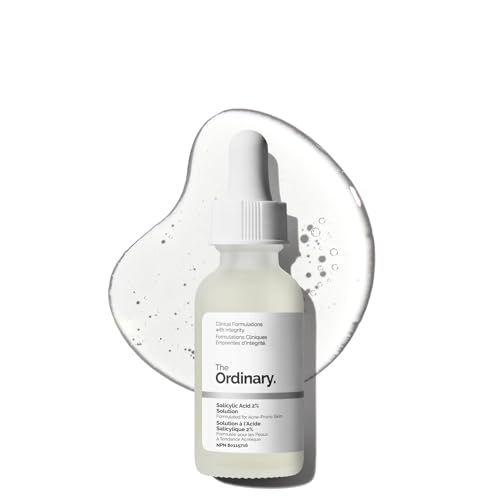
4. The Ordinary Salicylic Acid 2% Solution — Best budget pick
The cheapest pick here and the only one that goes after clogged pores directly, which also makes it the least gentle.
Best for: oily skin with blackheads and closed comedones Skip it if: your skin is dry, tight or already peeling
Salicylic acid at 2% is the standard over-the-counter dose, and The Ordinary explains why it works where the others do not: the formula is oil-soluble, so it penetrates oily areas to treat clogged pores. If your complaint is a gritty T-zone rather than red marks, no other pick in this group addresses it.
It is the cheapest of the five and it moves quickly here. The bottle is a clear 4.5 x 1.31 x 1.31 in dropper weighing 28 g. The Ordinary says the solution suits mild to moderate acne, including in teenagers.
Read the instructions carefully, because they are the least gentle in the set. Apply a thin layer 1 to 3 times daily, patch test first, and reduce application if dryness or irritation occurs. Three times a day is a lot of acid for skin that reacts, and the brand's own contingency plan is to back off.
That is the trade. You get the only genuine pore-clearing active and the lowest price, and you accept the highest irritation risk of the five. Pair it with the ceramide serum below if you go this route.
Pros:
- Cheapest pick in this set
- Only oil-soluble, pore-penetrating active here
- Standard 2% concentration, clearly stated
- Explicit patch-test and back-off instructions
- Listing covers mild to moderate acne, teens included
Cons:
- Highest irritation risk of the five
- Up to 3x daily dosing invites overuse
- No ceramides, niacinamide or panthenol for support
- No stated hypoallergenic or fragrance-free claim
5. Cetaphil Ceramide Serum Skin Barrier Repair Sensitive Skin — Best for beginners
No exfoliating active at all, which is precisely why it is the safest first serum in this lineup.

Best for: a first serum, or repair between stronger treatments Skip it if: you want a serum that targets breakouts directly
Every other pick asks something of your skin. This one gives. Cetaphil claims 48 hour hydration, significant moisture barrier repair in one week, and visibly reduced dryness and roughness in 3 days. Those are the fastest published timelines in the group by a wide margin, and they are barrier claims rather than blemish claims.
The formula pairs ceramides with CICA, which Cetaphil says helps defend against surface free radicals. Like its Gentle Clear sibling, the listing describes it as hypoallergenic, fragrance free, paraben free and non-comedogenic.
Practically, this is the serum you buy alongside one of the others. Use it on the nights you skip the acid or the retinol. Two of the five picks share the Cetaphil sensitive-skin formulation approach, and they layer sensibly because neither fights the other.
The weakness is obvious and unavoidable. It treats nothing. It is also the slowest seller of the five here and sits at a mid price position while doing less active work than the cheaper CeraVe and Ordinary picks. Buy it knowing that.
Pros:
- Fastest published claims here, 3 days and 1 week
- Stated 48 hour hydration
- Ceramides plus CICA, no exfoliating active
- Hypoallergenic, fragrance free, non-comedogenic per listing
- Layers cleanly with any other pick in this set
Cons:
- Does nothing about blemishes or marks
- Mid price position for no active treatment
- Slowest seller of the five here
- Bulkiest weight in the set at 3.84 oz
How many drops should you start with?
Dosing is where most people wreck reactive skin, and only Anua spells it out. Borrow its logic for the rest.
- Frequency before quantity. Anua says start once or twice a week. Apply that thinking to the CeraVe retinol serum too, even though its listing gives no schedule.
- One product at a time. Add a second active only after the first has run four weeks without a reaction.
- Watch the listing's own escape hatch. The Ordinary tells you to reduce application if dryness or irritation occurs. That instruction exists because the outcome is common.
- Buffer with the barrier pick. The Cetaphil Ceramide Serum has no active to conflict with, so it fills the off nights.
A workable four-week ramp looks like this. Week one, active twice, barrier serum every other night. Week two, active three times. Week three, alternate nights. Week four, daily if nothing has stung. If you get to week two and your cheeks are tight and shiny, you moved too fast, not too slowly.
What the listings do not tell you
Read what is absent, not just what is printed. Across all five listings:
- No pH is published. For the salicylic acid pick especially, pH influences how the acid behaves, and it is nowhere on the page.
- No full ingredient list. You get named actives and highlights. If you have a specific botanical trigger, blue tansy oil in the Anua serum being an obvious candidate, you need the physical carton.
- No warranty or satisfaction terms. Not one of the five publishes any, which is normal for this category but worth knowing before you buy a 1 fl oz bottle you may not tolerate.
- No retinol percentage from CeraVe. Encapsulated tells you the delivery method, not the dose.
- Every pick is a single 1 fl oz or 1.01 fl oz unit, count of 1. No value multipacks in this group, so a bottle is a bottle.
One more absence matters. Nothing in this data confirms any of these serums will clear active acne. Acne is a medical condition, and the listings speak in terms of post-acne marks, blemish-prone skin and congestion. Treat the modifier as your own judgment call, ideally with a clinician's input if breakouts are cystic or scarring.
When a different serum wins
The ranking above assumes marks and reactivity are your main problem. Change that assumption and the answer changes.
- If blackheads and closed comedones dominate, The Ordinary Salicylic Acid 2% Solution wins outright, because it is the only oil-soluble pore-clearing active in the set.
- If your skin flushes red more than it breaks out, the Anua serum wins, on 10% azelaic acid plus cica.
- If you have never used a serum before, start with the Cetaphil Ceramide Serum for a month, then reassess. The 3-day dryness claim is the fastest published payoff here.
- If budget is the binding constraint but you want turnover, the CeraVe serum is the second-cheapest route into retinol with ceramides included.
- If you already tried retinol and it burned, the 0.5% bakuchiol winner is the direct swap.
The threshold I would use: if you can name a specific clogged-pore texture you want gone, buy an acid. If you can only name discoloration and redness left behind, buy bakuchiol or azelaic acid.
The verdict
The Cetaphil Gentle Clear Post-Acne Skin Serum is the best gentle face serum for acne prone skin for most people reading this, and the reason is its published 0.5% bakuchiol dose. You know exactly what you are applying, the active is a retinol alternative rather than retinol, and the zinc-plus-prebiotic supporting cast handles surface oil and barrier support without a second product. Cetaphil's own claim runs to 12 weeks, so patience is the price of admission.
Two conditions flip that. First, if redness is as much your problem as blemishes, the Anua Azelaic Acid 10 Hyaluron Redness Soothing Serum takes it, on 10% azelaic acid, three hyaluronic acid types and the only proper ramp-up schedule in the group. Second, if clogged pores are the actual complaint, neither of those two touches them and The Ordinary Salicylic Acid 2% Solution becomes the buy, cheapest in the set and the only oil-soluble active here.
The CeraVe serum's exact advantage over the winner is money. It delivers a real retinoid plus niacinamide and three ceramides at the second-cheapest price position, and it has been on shelves since 2019. It loses only because it never publishes a strength.
FAQ
Is a gentle face serum worth it for acne prone skin?
A gentle face serum is worth it when your problem is what breakouts leave behind rather than the breakouts themselves. Marks, uneven tone and rough texture all respond to actives over weeks. Cetaphil's Gentle Clear listing quotes 12 weeks for visible change. If you need active pimples treated, that is a conversation for a clinician, not a serum aisle.
Which is cheaper, The Ordinary or CeraVe?
Cheaper of those two is The Ordinary Salicylic Acid 2% Solution, the lowest price position in this five-serum set, with the CeraVe Resurfacing Retinol Face Serum second-cheapest. Both are 1 fl oz. The Ordinary gives you a pore-clearing acid; CeraVe gives you encapsulated retinol plus niacinamide and three ceramides. Different jobs, similar spend.
Can I use bakuchiol and salicylic acid together?
Using bakuchiol and salicylic acid together is possible, but not on day one. Introduce one, run it four weeks, then add the second on alternate nights. The Ordinary's own listing says to reduce application if dryness or irritation appears, which is the signal to separate them. The Cetaphil Ceramide Serum is a safer companion for either.
Cetaphil Gentle Clear or Anua azelaic acid: which should I pick?
Cetaphil Gentle Clear or Anua comes down to redness. Pick the Cetaphil 0.5% bakuchiol serum for post-acne marks and texture on reactive skin. Pick the Anua 10% azelaic acid serum if your face flushes, stays pink, and holds dark spots. Anua sits at the highest price position here and needs a multi-week ramp from 1 to 2 drops.
What is the biggest mistake with serums for acne prone skin?
The biggest mistake with serums is stacking actives fast and skipping barrier repair. Tight, shiny, stinging skin is barrier damage, not progress, and it makes breakouts look worse. Use one active, ramp slowly, and keep something like the Cetaphil Ceramide Serum for off nights. Its listing claims 48 hour hydration and repair in one week.
Pick your camp before you pick a bottle. Marks and reactivity point to the Cetaphil Gentle Clear serum and its 0.5% bakuchiol; redness points to Anua's 10% azelaic acid; clogged pores point to The Ordinary. The winner earns the default slot for one unglamorous reason: it tells you its dose, keeps that dose low, and packs the oil control and barrier support into the same 1 fl oz bottle so you are not managing three products at once. Start there, give it the full twelve weeks, and add a second active only once the first has proved itself.