Best Halal Vitamin C Serums: Eclat Skincare Leads
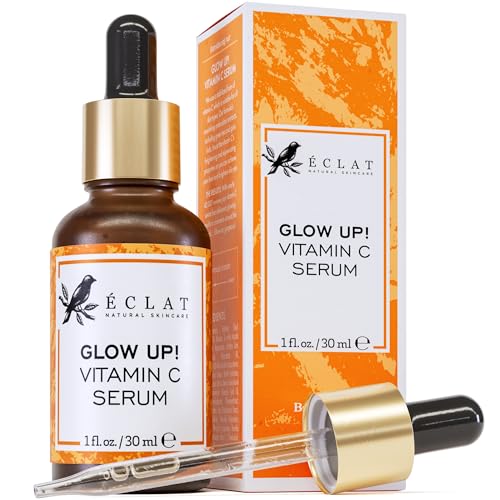
Five vitamin C serums compared on the specs that actually matter for skin that's oily in the T-zone and dry on the cheeks: vitamin C form, bottle size, and what the halal question really requires you to check.

By Frankie HopkinsUpdated 16 min read
On this page
- Best halal vitamin c serum for combination skin at a glance
- How I screened these five serums
- Can you actually confirm a serum is halal?
- Which vitamin C form suits combination skin?
- 1. Eclat Skincare Vitamin C Serum — Best overall
- 2. Timeless Skin Care Vitamin C Serum with Vitamin E & — Best premium
- 3. Naturium Vitamin C Complex Serum — Best for heavy use
- 4. SeoulCeuticals Korean Skin Care 20% Vitamin C Serum for — Best for small spaces
- 5. Envy Vitamin C Radiant Face Serum — Best for families
- How long does a 1 oz bottle really last?
- What the listings don't tell you
- The verdict
- FAQ
The best halal vitamin C serum for combination skin is the Eclat Skincare Vitamin C Serum, a 1 Fl Oz bottle built on sodium ascorbyl phosphate rather than raw ascorbic acid, which is the gentler route when your cheeks flake but your nose shines. If dark spots are your main target and your T-zone can take more, the Timeless Skin Care serum runs a 20% vitamin C and E blend with ferulic acid instead.
Quick shortlist before the detail: Eclat for most combination skin, Timeless if you want the highest stated concentration here, and Naturium's 1 oz complex if you're treating face, neck and chest and burning through product fast. Everything below explains why those three split the field.
Best halal vitamin c serum for combination skin at a glance
| Pick | Vitamin C form | Size | Price |
|---|---|---|---|
Best overall Eclat Skincare Vitamin C Serum |
Sodium ascorbyl phosphate + 3-O ethyl ascorbic acid | 1 Fl Oz | Check Price |
Best premium Timeless Skin Care Vitamin C Serum |
20% vitamin C + E, ferulic acid (claim) | 1 Fl Oz | Check Price |
Best for heavy use Naturium Vitamin C Complex Serum |
Pure L-ascorbic acid + Kakadu plum (claim) | 1 oz | Check Price |
Best for small spaces SeoulCeuticals 20% Vitamin C Serum |
20% vitamin C + CE ferulic (claim) | 1 Fl Oz | Check Price |
Best for families Envy Vitamin C Radiant Face Serum |
Vitamin C + E complex (claim) | 1.69 Fl Oz | Check Price |


How I screened these five serums
I started with the serums section of Amazon's treatments and masks category and lined up the published specifications side by side. Every pick here is a face serum sold in a single bottle, so nothing in this set is a multi-pack or a kit, and every comparison below is apples to apples on volume.
Three things decided which listings survived:
- A stated vitamin C form or concentration. A serum that just says "vitamin C" tells you nothing about how it will behave on an oily T-zone. Four of these five name a form or a percentage.
- A published size in fluid ounces. Four of the five are 1 oz. The Envy bottle is 1.69 Fl Oz, the largest here by a clear margin.
- A stated skin-type position. Timeless states dry and oily skin outright. Naturium says most skin types with a patch test. That's directly relevant when you're buying for skin that behaves two different ways on the same face.
What got cut: bundles that made per-ounce comparison impossible, and listings whose only detail was marketing adjectives with no form, no percentage and no volume.
One thing I want to be straight about. Not one of these five listings publishes a halal certification, so the halal question is handled in its own section below rather than being quietly folded into the picks.
Can you actually confirm a serum is halal?
Searching for the best halal vitamin c serum for combination skin doesn't return certified products. It returns vitamin C serums. Amazon's search treats "halal" as a soft signal, and none of these five listings carries a halal mark in its published details. So I'm not going to claim any of them is certified, because I can't see that on the data.
Here's what you can actually check yourself before buying:
- Look for a certification mark on the packaging photos, not in the marketing copy. A body like HFA, IFANCA or JAKIM prints a logo. A brand that has it usually shows it.
- Read the ingredient list for animal-derived and alcohol ingredients. Vegan status is not the same as halal status, but it removes a whole category of concern. Eclat and Timeless both state vegan or cruelty-free positions in their listing copy, and Naturium's listing states vegan and cruelty-free too.
- Email the brand. Two of these five are small labels. Small labels answer email.
- Check where it's made. Envy states made in Korea and SeoulCeuticals positions itself as Korean skincare, which affects which certifying bodies are likely to be involved.
That's an honest answer rather than a comfortable one. The vegan claims narrow the field usefully, but they aren't certification, and I won't dress them up as such.
Which vitamin C form suits combination skin?
This is the real deciding factor, and it's the one most guides skip in favour of the percentage on the front of the bottle.
Combination skin is two problems at once. The T-zone runs oily and tolerates actives well. The cheeks run dry and thin, and that's where irritation shows up first. A high-percentage L-ascorbic acid serum often works beautifully on the nose and forehead while leaving the cheeks tight and pink.
The forms named across these five listings:
- Sodium ascorbyl phosphate. Eclat's listing states this is what they use, and it argues in its own words that most brands use ascorbic acid, which it calls unstable and irritating. That's the brand's position, not a lab result, but the form itself is a derivative rather than raw ascorbic acid.
- 3-O ethyl ascorbic acid. Also named in the Eclat listing. Another derivative.
- Pure L-ascorbic acid. Naturium names this alongside Kakadu plum, and describes its formula as high concentration.
- 20% vitamin C blends. Both Timeless and SeoulCeuticals state 20% with ferulic acid support.
So the cutoff is straightforward. If your cheeks have ever stung under an acid, start with a derivative formula. If your whole face handles retinol and exfoliating acids without complaint, a 20% blend gives you more to work with on dark spots. That single question moves the winner more than any other spec in this comparison.
1. Eclat Skincare Vitamin C Serum — Best overall
A derivative-based vitamin C in a 1 Fl Oz bottle, which is the sensible default when half your face is oily and half is dry.
Best for: combination skin that stings under strong acids Skip it if: you want a high-percentage L-ascorbic acid formula
What separates this one inside this set is the vitamin C form. Eclat names sodium ascorbyl phosphate and 3-O ethyl ascorbic acid, both derivatives, while three of the other four picks lean on ascorbic acid or a stated 20% blend. For skin that's oily down the middle and dry on the sides, that's the safer opening move.
The listing also claims hyaluronic acid, aloe vera and vitamin E for hydration, and describes the texture as a lightweight formula that melts into the skin. Eclat says its own blind study had 98% of participants calling the serum more nourishing than a leading brand, which is the brand's figure and worth reading as marketing rather than measurement.
Practical notes from the specs. The bottle is 1 Fl Oz with a shipping weight of 3.17 oz, and it measures 4.29 x 1.38 x 1.42 in, so it's a tall, slim bottle rather than a squat one. It's the cheapest of the five and it sells faster than every other pick here.
The trade-off: a derivative formula generally works more gradually than a 20% ascorbic acid serum. If dark spots are your single biggest concern, Timeless gives you more firepower.
Pros:
- Sodium ascorbyl phosphate rather than raw ascorbic acid
- Cheapest of the five picks
- Hyaluronic acid, aloe vera and vitamin E all listed
- The fastest-selling pick in this set
- Slim 1.38 in footprint fits a crowded shelf
Cons:
- No stated vitamin C percentage anywhere in the listing
- The 98% blind-study figure is the brand's own, not independent
- Derivative forms typically act more slowly on dark spots
- Only two sellers list it
2. Timeless Skin Care Vitamin C Serum with Vitamin E & — Best premium
The highest stated concentration here, with a listing that names dry and oily skin explicitly.

Best for: stubborn dark spots and an oilier T-zone Skip it if: your cheeks flake in winter
Timeless is the most expensive pick here, and what you're paying for is concentration. The listing states a blend of 20% vitamin C and E alongside ferulic acid, formulated to aid an even tone and texture. Both of those are the brand's claims, but a stated percentage is still more useful than none.
Two details make it interesting for combination skin. First, the listing addresses dry and oily skin directly rather than the vague "all skin types" line. Second, it's fragrance-free with no parabens or dyes per the brand's own copy, which removes some common irritants from the equation on the drier half of your face.
The specs tell you it's a pump, not a dropper: 2-3 pumps onto freshly cleansed skin is the stated instruction. At 6 x 2 x 2 in it's the tallest bottle in this comparison, and at 1.06 oz shipping weight the lightest. It's also the only pick here with a published release year of 2021.
The trade-off is the obvious one. A stated 20% is a lot for thin cheek skin, and if you've reacted to acids before, that percentage is a reason to hesitate rather than a selling point.
Pros:
- Highest stated vitamin C concentration in this set
- Fragrance-free with no parabens or dyes claimed
- Listing names dry and oily skin directly
- Ferulic acid included per the brand's claim
- Published 2021 release, the clearest provenance here
Cons:
- The most expensive pick here
- A 20% claim is a risk on dry cheeks
- Tallest bottle at 6 in, awkward in a small cabinet
- Pump delivery makes dosing less precise than a dropper
3. Naturium Vitamin C Complex Serum — Best for heavy use
The only pick that tells you to apply it across face, neck and chest, and the only one citing a clinical study with a sample size.

Best for: face, neck and chest every morning Skip it if: you react to pure L-ascorbic acid
Naturium is the pick for anyone using vitamin C as more than a face-only step. The listing directs you to apply an even layer onto face, neck and chest, morning or night, avoiding the eye area. Nobody else here gives you that instruction, and it changes how quickly you'll get through a 1 oz bottle.
The formula is described as pure L-ascorbic acid plus Kakadu plum, which the brand calls one of the richest sources of vitamin C. Naturium also cites an 8-week clinical study on 32 participants and says results on fine lines showed in 4 weeks. That's the brand's study and the brand's summary, but a stated participant count is more transparency than most of this set offers.
For combination skin, the useful line is that it's stated appropriate for most skin types including sensitive skin, with a patch test advised first. The listing also claims pH-appropriate formulation, vegan, cruelty-free, paraben-free and gluten-free.
Sitting mid-range on price, it's the middle option in this set. The trade-off: pure L-ascorbic acid is the form Eclat argues against, so if your cheeks are reactive you're taking on more risk here than with a derivative.
Pros:
- Only pick with published instructions for neck and chest
- Cites an 8-week study on 32 participants
- Stated appropriate for sensitive skin with a patch test
- Kakadu plum plus L-ascorbic acid per the listing
- Mid-range price rather than the top tier
Cons:
- Pure L-ascorbic acid is riskier on dry cheeks
- No stated concentration percentage
- The clinical claim is brand-run, not independent
- Weight given in grams only, at 28.3 g, so harder to compare
4. SeoulCeuticals Korean Skin Care 20% Vitamin C Serum for — Best for small spaces
At 3 x 1.5 x 1.5 in, the smallest bottle here by a wide margin, in an amber glass that suits an unstable active.

Best for: a crowded shelf or a travel bag Skip it if: you want a published warranty or release date
The footprint is the story. This bottle is 3 x 1.5 x 1.5 in and holds the same 1 Fl Oz as three of the other picks. Timeless, by contrast, stands 6 in tall. If your bathroom shelf is already full or you want vitamin C in a carry-on, that difference is the whole decision.
The colour is listed as amber, which matters more than it sounds: vitamin C degrades with light exposure, and tinted glass is the standard answer. SeoulCeuticals states a 20% vitamin C formula with CE ferulic support, and claims the same active ingredients as more expensive CE ferulic serums.
The brand's other claims are strong and I'll leave them attributed. It says results appear within 3 weeks of daily use, and that the serum helps shrink pores, clear acne and reduce the appearance of acne scars. The pore and acne claims are the ones combination-skin shoppers will notice, and they're marketing language, not measured outcomes.
The trade-off against the rest: it publishes the least. No count, no warranty, no release year, and the smallest bottle means the least room for error if you're treating a larger area.
Pros:
- Smallest bottle here at 3 x 1.5 x 1.5 in
- Amber glass suits a light-sensitive active
- Stated 20% vitamin C with CE ferulic
- Full 1 Fl Oz in a compact footprint
Cons:
- Fewest published specifications in this set
- No stated release year or warranty
- Second-most expensive of the five
- Pore-shrinking and acne claims are unverifiable marketing copy
5. Envy Vitamin C Radiant Face Serum — Best for families
At 1.69 Fl Oz it holds roughly 69% more than the four 1 oz bottles, which is what you want when two people share.

Best for: two people sharing one bottle Skip it if: you want more than three published feature claims
Volume is where Envy wins. Every other pick here is 1 oz. This one is 1.69 Fl Oz in a 2 x 2 x 4.5 in bottle, and it's the second-cheapest of the five. That combination is the reason it earns the family label: two faces getting through vitamin C every morning will empty a 1 oz bottle fast.
The listing describes a water-light serum that absorbs quickly with a weightless, non-sticky slip and a satin finish under SPF. For combination skin that's a genuinely relevant texture note, because a heavy serum sits on an oily T-zone. Envy also states a vitamin C and E complex, made in Korea, dermatologist tested, vegan, cruelty-free, 95 percent natural, and free of parabens, sulfates and phthalates.
That's the brand's own description across the board, and there's less of it than elsewhere. Envy publishes three feature claims where the others publish five, and no vitamin C form or percentage appears anywhere.
It's also the slowest seller of the five by a wide margin. That doesn't make it a bad serum, but it does mean fewer shoppers here have chosen it over the alternatives.
Pros:
- Largest volume at 1.69 Fl Oz
- Second-cheapest pick in this set
- Water-light texture stated, useful on an oily T-zone
- Vegan and free of parabens, sulfates and phthalates per the listing
Cons:
- No vitamin C form or percentage published
- Only three feature claims, the fewest here
- The slowest seller of the five
- No published weight or model detail
How long does a 1 oz bottle really last?
Four of these five are 1 oz. That number tells you less than you'd think, because your usage depends entirely on how much surface you're treating.
Some rough arithmetic using the instructions the listings themselves publish:
- Face only, once daily. A few drops or 2-3 pumps, which is what Timeless states. A 1 oz bottle covers a long stretch at that rate.
- Face, neck and chest, once daily. Naturium's stated application area. That's roughly triple the surface, so the same 1 oz empties around three times faster.
- Twice daily. Naturium's listing permits morning or night; double the rate again if you use both.
- Two people sharing. Halve whatever you calculated.
Run those last two together and you can see why the Envy bottle at 1.69 Fl Oz stops being a footnote. It holds a meaningful margin over the 1 oz field, and it's the second-cheapest pick here.
One more thing worth flagging: vitamin C degrades on exposure to light and air. A bottle you take six months to finish is a bottle whose last third may be weaker than its first. That's an argument for matching bottle size to your actual usage rather than buying the biggest one on offer, and it's part of why SeoulCeuticals packaging it in amber is a sensible detail.
What the listings don't tell you
The gaps are as informative as the specifications, and here's where the best halal vitamin c serum for combination skin question runs into the limits of listing data.
- No halal certification anywhere. Covered above, and it's the biggest gap of all.
- No full ingredient lists. You get named highlights: hyaluronic acid, ferulic acid, Kakadu plum. You don't get the INCI list, which is what you actually need to check for animal derivatives or alcohol.
- No pH figures. Naturium says pH-appropriate. Nobody publishes an actual number, and pH is what determines how a vitamin C serum behaves on skin.
- No warranties. The one field labelled warranty on the Eclat listing is filled with marketing copy about formulation, not a guarantee.
- Only Timeless and Naturium publish release years, 2021 and 2019. For a category where formulations get reworked, knowing which version you're buying has real value.
The practical response is the same in every case: check the physical packaging photos and the ingredient panel before you commit, and treat every percentage and every study figure in this comparison as the brand's claim until you see it verified elsewhere.
The verdict
The Eclat Skincare Vitamin C Serum is the best halal vitamin c serum for combination skin in this set, and the reason is the vitamin C form. Sodium ascorbyl phosphate and 3-O ethyl ascorbic acid are derivatives, and derivatives are the sensible starting point when your cheeks are dry and thin while your T-zone runs oily. It's also the cheapest of the five and the fastest-selling, and the 1 Fl Oz bottle with a 1.38 in footprint fits anywhere. That combination of gentle form and low commitment makes it the right default.
Two conditions flip it. First, if dark spots are your primary target and your whole face tolerates acids, Timeless Skin Care states 20% vitamin C and E with ferulic acid, and it names dry and oily skin explicitly. Its exact advantage over Eclat is a published concentration figure, which Eclat never gives you. Second, if you're treating face, neck and chest or sharing a bottle, volume decides it: Naturium publishes the neck-and-chest instruction, and Envy's 1.69 Fl Oz is the largest here.
None of these carries a published halal mark. Verify that yourself before buying, whichever one you pick.
FAQ
Is a halal vitamin C serum worth paying more for?
A halal vitamin C serum is worth paying more for only when the certification is actually printed on the packaging. None of these five listings publishes one, so paying a premium on the assumption of certification gets you nothing verifiable. Check the ingredient panel and the packaging photos first. Vegan claims narrow the field usefully, but they answer a different question than halal certification does.
Which vitamin C form is best for combination skin?
The vitamin C form that suits combination skin best is usually a derivative rather than raw ascorbic acid, because derivatives tend to be gentler on the dry areas while still working on the oily ones. Eclat names sodium ascorbyl phosphate and 3-O ethyl ascorbic acid. Naturium uses pure L-ascorbic acid. If your cheeks have reacted to acids before, start with the derivative option.
Eclat or Timeless: which should I choose?
Choose Eclat or Timeless based on one question: how much irritation can your dry areas take? Eclat uses derivative forms, costs the least here, and is the safer opening move. Timeless states 20% vitamin C and E with ferulic acid, names dry and oily skin directly, and is the most expensive pick. Higher concentration, higher risk on thin cheek skin.
Can I use a vitamin C serum on my neck and chest too?
You can use a vitamin C serum on your neck and chest, and Naturium is the only pick here whose listing tells you to. It directs an even layer onto face, neck and chest, morning or night, while avoiding the eye area. Doing that roughly triples the area you're covering, so a 1 oz bottle empties about three times faster than face-only use.
What's the biggest mistake when buying a vitamin C serum?
The biggest mistake when buying a vitamin C serum is chasing the highest percentage on the label. A 20% formula on dry, thin cheek skin causes the tightness and redness that makes people abandon vitamin C entirely. Match the form to your most sensitive area, not your most tolerant one. Also check the bottle: clear glass and a slow-emptying size both work against a light-sensitive active.
Start with the Eclat serum on clean skin, patch test on one cheek for two nights, then build to daily use in the morning under sunscreen. If after six weeks your dark spots haven't shifted and nothing has stung, that's your signal to step up to the 20% Timeless formula rather than the other way round. Working up from a derivative is far less painful than working down from an irritated face. And whichever bottle you choose, photograph the ingredient panel when it arrives and check it against your own halal requirements, because no listing here does that job for you.