Best Face Mask Skincare for Oily Skin: NY Biology Wins

Six masks compared for shine-prone skin, from a 8.8 oz Dead Sea mud jar to a four-pack of hydrogel sheets. The winner, the runner-up, and when to switch.

By Frankie HopkinsUpdated 15 min read
On this page
- Best face mask skincare for oily skin at a glance
- Who this guide is not for
- How I screened 30 listings down to six
- Clay, mud or sheet: which format suits oily skin?
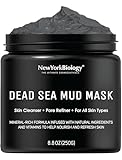
- 1. New York Biology Dead Sea Mud Mask — Best overall
- 2. La Roche-Posay Effaclar Clay Face Mask — Best premium
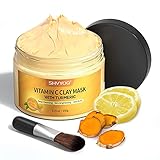
- 3. SHVYOG Turmeric Vitamin C Clay Mask — Best for heavy use
- 4. BIODANCE Bio-Collagen Real Deep Mask — Best for families
- 5. Celavi Korean Face Mask Sheet Set — Best compact
- 6. NING Clay Mask — Best budget pick
- What the listings do not tell you about the oily-skin claim
- How often should you mask if your skin runs oily?
- The verdict
- FAQ
The best face mask skincare for oily skin here is New York Biology's Dead Sea Mud Mask, an 8.8 oz jar of mineral mud that the brand says refines the look of pores and absorbs excess oil across face and body. La Roche-Posay's Effaclar Clay Mask is the pick if you want a smaller 3.4 oz kaolin formula built specifically around a five-minute rinse. Who this guide is not for matters as much as the winner. If you have genuinely dry skin, a mud or clay pick will feel tight and mean; a hydrogel sheet is the honest answer, and I flag which one below. Also worth naming upfront: Amazon's search returned masks the brands market to every skin type, not only oily. I have chosen picks that lean toward oil control, but the "for oily skin" label is not a lab result. Read the ingredients, then decide.
Best face mask skincare for oily skin at a glance
| Pick | Format | Size | Price |
|---|---|---|---|
Best overall New York Biology Dead Sea Mud Mask |
Mud jar | 8.8 oz | Check Price |
Best premium La Roche-Posay Effaclar Clay Mask |
Kaolin clay | 3.38 oz | Check Price |
Best for heavy use SHVYOG Turmeric Vitamin C Clay Mask |
Kaolin clay | 5.29 oz | Check Price |
Best for families BIODANCE Bio-Collagen Real Deep Mask |
Hydrogel sheet | 4 sheets, 1.19 oz each | Check Price |
Best compact Celavi Korean Face Mask Sheet Set |
Sheet variety | 12 sheets | Check Price |
Best budget pick NING Clay Mask |
Triple-mud | 3.88 oz | Check Price |



Who this guide is not for
If your skin is genuinely dry, tight after cleansing, or flaking in winter, a clay or mud mask is the wrong tool. Every clay pick in this set is designed to pull oil out. Do that to dry skin twice a week and you will feel worse, not better.
You have two better options in this set. The BIODANCE Bio-Collagen Real Deep Mask is a hydrating overnight hydrogel sheet, and the brand says it uses oligo-hyaluronic acid for deeper moisturising than regular hyaluronic acid. The Celavi 12-pack includes hydrating essences (aloe vera, cucumber, honey) alongside the oil-focused ones (charcoal, tea tree).
Also skip this guide if you are shopping for acne treatment specifically. Only La Roche-Posay's listing mentions non-comedogenicity testing. The rest of the picks are marketed for pore refinement and oil control, which is not the same claim. Best face mask skincare for oily skin is about surface shine and pore appearance. A dermatologist is the right stop for anything more.
How I screened 30 listings down to six
I filtered oily-skin mask listings for one thing first: whether the brand's own description actually mentions oil control or pore refinement. Three named reasons things were cut. First, listings that only claimed "hydration" or "brightening" without an oil claim went out, because a hydrator is not what the query is asking for. Second, single-use sachets from unknown brands with no ingredient list on the listing went out, because there is nothing to compare against. Third, novelty formats (peel-off glitter masks, LED-branded sheets) went out, because the format itself is the story, not the skincare.
What survived split into three formats: mud jars (New York Biology, NING), kaolin clay (La Roche-Posay, SHVYOG) and sheet formats (BIODANCE, Celavi). Every pick's listing describes at least one of oil control, pore refinement or matte finish. Every ASIN in the final six carries at least two published specifications, so you can compare size and format at a glance. Two picks, NING and Celavi, publish sparser specs than the others, and I have said so in their sections rather than pretending otherwise.
Clay, mud or sheet: which format suits oily skin?
Three formats, three different jobs. Here is how they compare across this set:
- Mud jars (New York Biology 8.8 oz, NING 3.88 oz) are the largest and most economical per use. Mud tends to be denser than clay and includes moisturising ingredients alongside the absorbent minerals. New York Biology lists aloe vera, calendula oil, Vitamin E and jojoba oil in the formula.
- Kaolin clay (La Roche-Posay 3.38 oz, SHVYOG 5.29 oz) is the classic oil-control format. La Roche-Posay's listing names kaolin clay specifically as the mineral that helps remove excess oil, and the instructions call for a five-minute leave-on. Clay dries faster and rinses cleaner than mud.
- Sheet masks (BIODANCE four hydrogel sheets, Celavi 12 assorted essences) do not strip oil. They deliver essence to the skin and leave it there. Useful in an oily-skin routine as a hydration step, not as the oil-control step.
If your priority is matte finish, pick clay. If your priority is a soothing weekly ritual with moisturising extras, pick mud. If you want single-use convenience or you travel, pick sheet.
1. New York Biology Dead Sea Mud Mask — Best overall
An 8.8 oz jar of Dead Sea mineral mud that covers face and body and is the safest all-round pick in this set.
Best for: combination and oily skin that wants one jar to cover face and body Skip it if: you want single-use sheets with no cleanup
New York Biology wins on jar size and ingredient balance. At 8.8 oz, this is the largest single container in the set, more than twice the volume of La Roche-Posay's 3.38 oz tube and over 2.5 times the size of NING's 3.88 oz. The brand also stacks four moisturising ingredients into the formula: aloe vera, calendula oil, Vitamin E and jojoba oil, alongside the Dead Sea mineral mud. That matters for oily skin because pure absorbent clay can over-strip; the added oils cushion the pull.
The listing claims the mud refines the look of pores and absorbs excess oil, and the brand says the formula is alcohol, paraben, sulfate and cruelty free. The jar measures 3 x 2.5 x 3 in and weighs 0.55 lb, so it lives on a shelf, not in a travel bag. It sells faster than every other pick here except BIODANCE. The trade-off against the clay picks is the cleanup: mud is denser than kaolin, and rinsing takes longer.
Pros:
- Largest jar in this set at 8.8 oz
- Four moisturising ingredients cushion the oil pull
- Marketed for face and body, not just face
- Alcohol, paraben and sulfate free per the brand
Cons:
- Denser than clay, so rinsing takes longer
- Jar format is not travel-friendly at 0.55 lb
- Only two sellers list it
2. La Roche-Posay Effaclar Clay Face Mask — Best premium
A 3.38 oz kaolin clay tube built around a five-minute rinse and explicitly formulated for oily skin.

Best for: shine-prone skin that wants a five-minute clay treatment from a dermatologist-adjacent brand Skip it if: you need a large jar for regular full-face use
Effaclar is the only pick in this set the brand markets specifically as "for oily skin" in the product name. La Roche-Posay describes it as a 2-in-1 purifying clay mask and skin mattifier, with kaolin clay as the named oil-absorbing mineral. The listing also states the formula has been tested on acne-prone skin under a non-comedogenicity test, which no other pick here mentions. Instructions are unusually specific: apply one to two times a week in a thin layer after cleansing, leave for five minutes, rinse.
At 3.38 oz, it is the most expensive pick here by price position and the second-smallest by volume, so you are paying for the formulation and the clinical positioning rather than jar size. Dimensions of 6.8 x 1.5 x 3.1 in put it in tube format, not a pot. The trade-off against New York Biology is straightforward: less product, higher price position, but a tighter oily-skin claim and a shorter contact time.
Pros:
- Only pick named "for oily skin" on the listing
- Non-comedogenicity test cited on the listing
- Five-minute rinse suits a short routine
- Tube format travels better than a jar
Cons:
- The highest price position in this set
- 3.38 oz is the smallest jar or tube here
- One to two uses per week means it lasts, but does not stretch further than that
3. SHVYOG Turmeric Vitamin C Clay Mask — Best for heavy use
A 5.29 oz kaolin clay pot with turmeric and vitamin C, roomy enough for two-a-week use without rationing.

Best for: anyone who masks twice a week and does not want to ration the jar Skip it if: yellow turmeric staining on towels bothers you
SHVYOG sits in the middle of this set on volume and at the entry end on price position, which is a useful combination for anyone who masks often. At 5.29 oz, it holds 56% more product than La Roche-Posay's 3.38 oz and 36% more than NING's 3.88 oz. The formula pairs kaolin clay with turmeric and vitamin C. SHVYOG says the vitamin C stimulates collagen and the combination targets dullness, which is a slightly different pitch from the pure oil-control picks.
For oily skin specifically, kaolin is the working ingredient. Turmeric adds colour, which is why this mask is yellow rather than grey or beige. That colour has practical consequences worth naming: yellow clay can stain light-coloured towels and cloth headbands if you are careless with rinsing. The trade-off against La Roche-Posay is transparency. SHVYOG's listing carries only two published feature claims and no leave-on time, so you are working from less information at the point of purchase.
Pros:
- 5.29 oz sits between winner and premium pick on size
- Kaolin clay plus turmeric and vitamin C
- Entry-tier price position in this set
- Second-cheapest of the six
Cons:
- Yellow pigment can stain towels
- Only two feature claims published on the listing
- No stated leave-on time on the listing
4. BIODANCE Bio-Collagen Real Deep Mask — Best for families
Four 1.19 oz overnight hydrogel sheets that hydrate rather than strip, useful as the moisture step in an oily-skin routine.

Best for: sharing hydrating sheet masks across a household and travel bags Skip it if: your main goal is stripping oil rather than adding moisture
BIODANCE is the fastest-selling pick in the whole set. The pack contains four hydrogel sheets at 1.19 oz each, so the box weighs 4.79 oz and slips into a travel bag at 0.91 x 7.17 x 6.42 in. The brand's pitch is different from the clay picks: this is an overnight hydrogel that the brand says uses ultra-low molecular collagen for penetration, oligo-hyaluronic acid for hydration, and niacinamide and galactomyces ferment filtrate for tone. BIODANCE describes it as free from 19 controversial substances.
Why include a hydrating sheet in an oily-skin guide? Because oily skin is not the same as hydrated skin. Stripping oil twice a week and doing nothing else can push the skin to produce more, not less. A hydrogel sheet on the off nights is the counterweight. The trade-off against the mud and clay picks is honest: this does not control oil. It sits at the premium end of the price positions in this set, and four sheets is a small pack for the price.
Pros:
- Fastest-selling pick in this set
- Four discrete sheets, easy to share
- Hydrogel format claims deeper absorption than paper sheets
- Free from 19 substances per the brand
Cons:
- Does not control oil
- Only four sheets per box
- Premium price position in this set
5. Celavi Korean Face Mask Sheet Set — Best compact
Twelve single-use sheet masks in twelve different essences, useful for testing what your skin actually likes.

Best for: trying twelve different essences before committing to a jar Skip it if: you want a single consistent formula every time
Celavi packs twelve sheet masks into a 6.25 x 4.5 x 0.15 in envelope, which is the flattest packaging in this set and the easiest to slide into a drawer. The 12 essences named on the listing: collagen, seaweed, honey, pomegranate, aloe vera, vitamin C, acai berry, tea tree, avocado, ginseng, cucumber, charcoal. For oily skin, the useful three are charcoal, tea tree and vitamin C. The other nine lean hydrating and brightening.
Celavi says the sheets are made in Korea and are paraben, oil, sulfate and cruelty free. That "oil free" claim is worth flagging because it means the essences themselves contain no added oils, which is a real distinction for oily skin. The trade-off is that with twelve different formulas, you are not repeating any one of them enough to see a pattern. This is a sampler, not a routine. It also runs mid-range on price position for what is essentially trial format.
Pros:
- 12 different essences to test
- Flat 0.15 in packaging stores anywhere
- Three formulas (charcoal, tea tree, vitamin C) lean toward oily skin
- Oil-free essences per the brand
Cons:
- Only one sheet of each formula
- Not a repeatable routine
- Nine of twelve essences lean hydrating, not oil control
6. NING Clay Mask — Best budget pick
A 3.88 oz triple-mud formula at the cheapest price position in this set, useful as a first clay mask.

Best for: a first clay mask when you are not sure how your skin will react Skip it if: you need a longer spec sheet before you buy
NING is the cheapest of the six by price position, which makes it the low-risk entry point if you have never used a clay mask before. The listing names three muds working together: Amazon White Clay, Dead Sea Mud, and Canadian Glacial Mud. NING also lists papaya enzyme for exfoliation and malachite extract for environmental protection, and the brand says the formula is vegan, preservative free and dermatologist tested.
The honest weakness here is transparency. NING publishes only two specifications, size and count, so there is no weight, no dimensions and no model number to compare against. The 3.88 oz jar sits between La Roche-Posay's 3.38 oz and SHVYOG's 5.29 oz on volume. It is the slowest seller of the six by a wide margin, so you are earlier to this product than most buyers. The trade-off against SHVYOG at a similar entry price position is that NING publishes fewer specifications but names three muds and two active extracts.
Pros:
- Cheapest pick in this set
- Three named muds in one formula
- Vegan and preservative free per the brand
- Dermatologist-tested claim on the listing
Cons:
- Only two published specifications
- No stated weight or dimensions on the listing
- Slowest seller of the six
- Newer product with less track record
What the listings do not tell you about the oily-skin claim
Every one of these six masks appears in an Amazon search for face masks marketed to oily skin. That does not mean each one was formulated for oily skin. Read the listings carefully and a split appears.
Only La Roche-Posay's product name contains "for oily skin". The rest use softer language: New York Biology says the mud "works for all skin types, including oily", NING says it is "suitable for all skin types", Celavi says "for dry, oily, or sensitive skin". SHVYOG's listing focuses on dullness rather than oil. BIODANCE does not mention oil control at all.
What that means for the buyer:
- If you want a mask formulated specifically for oily skin, La Roche-Posay is the only one in this set with that positioning in writing.
- If you want oil-control ingredients (kaolin clay, Dead Sea mud, charcoal), five of the six qualify.
- If you want a mask that also hydrates, BIODANCE and Celavi are the hydrating options.
None of this is a criticism of the products. It is a reminder that "for oily skin" as a search term is doing more work than any single listing here supports. The primary keyword in this category is looser than it looks, and best face mask skincare for oily skin means matching a format to a routine, not chasing a label.
How often should you mask if your skin runs oily?
Twice a week is the ceiling for clay and mud masks on most oily skin. La Roche-Posay is the only pick that publishes a schedule: one to two times a week, five minutes per application, rinsed with water. Treat that as a reasonable default for the other clay picks in this set. The mud picks (New York Biology, NING) do not publish a leave-on time, so start conservative at five to ten minutes and adjust.
Sheet masks work on a different rhythm. BIODANCE is designed as an overnight sheet, so once a week is generous and once a fortnight is plenty for a four-sheet box. Celavi's twelve single-use sheets can run once every three or four days without stripping, because the essences are hydration and brightening rather than oil pull.
The mistake to avoid: masking every night because your skin looks oily every morning. Over-masking with clay causes the skin to compensate by producing more oil, not less. The right answer is fewer, better sessions, and a hydration step on the off nights.
The verdict
New York Biology's Dead Sea Mud Mask wins this set on the combination that actually matters for oily skin: an 8.8 oz jar (the largest here), a mineral mud base that pulls oil, and four moisturising ingredients (aloe vera, calendula oil, Vitamin E, jojoba oil) that keep the pull from stripping. Best face mask skincare for oily skin usually means picking between size and formulation. New York Biology gives you both.
If your priority is a formulation named "for oily skin" on the product itself, La Roche-Posay's Effaclar Clay Face Mask is the runner-up. It is the smallest pick here at 3.38 oz and the highest by price position, but it is the only one with non-comedogenicity testing cited on the listing and the only one with a written five-minute rinse schedule. That precision is what you pay for.
If you mask twice a week and you want to stretch the jar further, SHVYOG's 5.29 oz turmeric and kaolin pot at an entry-tier price is the practical middle answer. The cutoff between winner and runner-up is simple: buy New York Biology if you want one jar for face and body, La Roche-Posay if you want the tightest oily-skin claim in writing.
FAQ
Is a clay mask or a mud mask better for oily skin?
Clay masks and mud masks both work on oily skin, but the pull is different. Kaolin clay (La Roche-Posay, SHVYOG) tends to dry faster and rinse cleaner, which suits a short routine. Dead Sea mud (New York Biology, NING) is denser and usually includes moisturising ingredients, which softens the strip. Clay for a quick five-minute session, mud for a longer soothing one.
Is the La Roche-Posay Effaclar mask worth the premium price?
La Roche-Posay Effaclar is worth the premium if you want the tightest oily-skin positioning in this set. It is the only pick here named "for oily skin" on the product, the only one that cites a non-comedogenicity test on the listing, and the only one with a written five-minute rinse schedule. If you want the largest jar for the least money, New York Biology gets you closer to that goal.
How does the 8.8 oz size of New York Biology compare to the others?
The 8.8 oz size of New York Biology is the largest single container in this set. It is more than twice the volume of La Roche-Posay's 3.38 oz tube, 66% larger than SHVYOG's 5.29 oz jar, and over 2.2 times NING's 3.88 oz. If you plan to mask both face and body, or share the jar with a partner, that size difference decides it.
New York Biology vs La Roche-Posay: which should oily skin pick?
New York Biology vs La Roche-Posay comes down to size against specificity. New York Biology gives you 8.8 oz of Dead Sea mud with four added moisturising oils, useful for face and body. La Roche-Posay gives you 3.38 oz of kaolin clay named specifically for oily skin with a five-minute rinse. Pick New York Biology for value and coverage, La Roche-Posay for the clinical positioning.
What is the most common mistake people make with oily-skin masks?
The most common mistake people make with oily-skin masks is over-masking. Using clay or mud more than twice a week signals to the skin that it is being stripped, and the skin compensates by producing more oil. La Roche-Posay's listing caps use at one to two times weekly for a reason. On the off nights, a hydrogel sheet like BIODANCE is the counterweight, not more clay.
Six masks, three formats, one question: what is your skin actually asking for this week? If it is shine control, start with New York Biology's 8.8 oz jar twice a week and see how your skin settles after a fortnight. If it is a shorter routine or a tighter oily-skin claim in writing, move to La Roche-Posay's five-minute Effaclar. And if you are new to clay masks entirely, NING at the entry price is the least expensive way to test the format before you commit. Oily skin rarely needs more product. It needs the right product used less often, and a hydration step on the nights in between.